

The Lesson of the Akeida
Rabbi Isser New
One of the most difficult questions about the Akeidah is why Hashem tells Avraham to sacrifice his beloved son, Yitzchak, only to stop him at the very last moment. If Hashem never intended for Avraham to actually sacrifice Yitzchak, why put him through such an extraordinary test in the first place? What was Hashem trying to teach Avraham, and what lesson are we meant to take from this experience?
Perhaps one of the most powerful lessons of the Akeidah is that serving Hashem requires us to let go of our own expectations and embrace the reality Hashem places before us. It is not enough to serve Hashem when life unfolds according to the way we imagined. True avodas Hashem means accepting what Hashem gives us, even when it looks very different from what we hoped for, and continuing to serve Him with joy.
Consider Avraham's journey. He spent so many years praying and yearning for a child. Having a son was not simply a dream; it was the fulfillment of a lifelong hope and the beginning of the future Hashem had promised him. Finally, Yitzchak was born. And then, just when Avraham had everything he had waited for, Hashem asked him to offer that very son as a korban.
Avraham could have struggled with the contradiction. How could this be? How could the child who represented the fulfillment of Hashem's promise now be the one Hashem was asking him to give up? Yet Avraham demonstrated that his relationship with Hashem was not dependent on his expectations. He was ready to follow Hashem, even when he could not understand how the pieces fit together.
Ultimately, Hashem stopped Avraham from sacrificing Yitzchak. The message was not that Avraham's expectations were wrong, or that his love for Yitzchak was misplaced. Rather, the message was that our commitment to Hashem must be greater than our attachment to the way we think things should be.
This lesson has enormous relevance to education.
As parents and educators, we must have expectations for our children. Expectations give direction, create goals, and communicate our belief in a child's potential. Without expectations, we risk not challenging children to grow or helping them reach heights they may never have imagined possible.
But there is a delicate balance. Sometimes we become so attached to our expectations for a child that we lose sight of the child standing right in front of us. We have an image of what we want them to accomplish, how we want them to behave, what interests they should pursue, or what path they should follow. When reality does not match that image, our frustration can become greater than our appreciation for who the child actually is.
At that point, something important has shifted. Education is no longer about the child; it has become about our expectations.
The challenge is to hold both ideas at once: to have high hopes and meaningful goals for our children while remaining flexible enough to recognize that Hashem has given each child a unique personality, strengths, challenges, and journey. Our job is to guide, encourage, challenge, and inspire, but not to become so attached to our vision that we fail to appreciate the person Hashem has placed in our care.
Perhaps this is the deeper lesson of the Akeidah. Avraham teaches us that we can be deeply invested in something, pray for it, work toward it, and love it, without allowing our expectations to define our relationship with Hashem.
In education, our greatest success may not be when a child becomes exactly who we imagined, but when we help that child become the best version of who Hashem created them to be. The goal is not to abandon expectations, but to hold them with humility, flexibility, and joy.
That balance may be one of the hardest parts of parenting and education, but it is also one of the most important lessons we can learn from Avraham Avinu.

Parshas Vayeira introduces us to Avraham Avinu’s extraordinary dedication to the mitzvah of hachnasas orchim. Even while recovering from his bris milah, Avraham eagerly watched for guests and ran to welcome three travelers into his home. He offered them food, drink, and rest, making their comfort his personal priority. His kindness came from a genuine desire to care for others, expressed through every detail of his hospitality.
Chinuch offers countless opportunities to develop this same sensitivity in children. When children see adults noticing someone who needs help, making room for another person, or going out of their way to make someone feel welcome, they learn that chesed is a way of life. Small, thoughtful actions help children develop an awareness of others and a natural desire to bring warmth and kindness into the world.

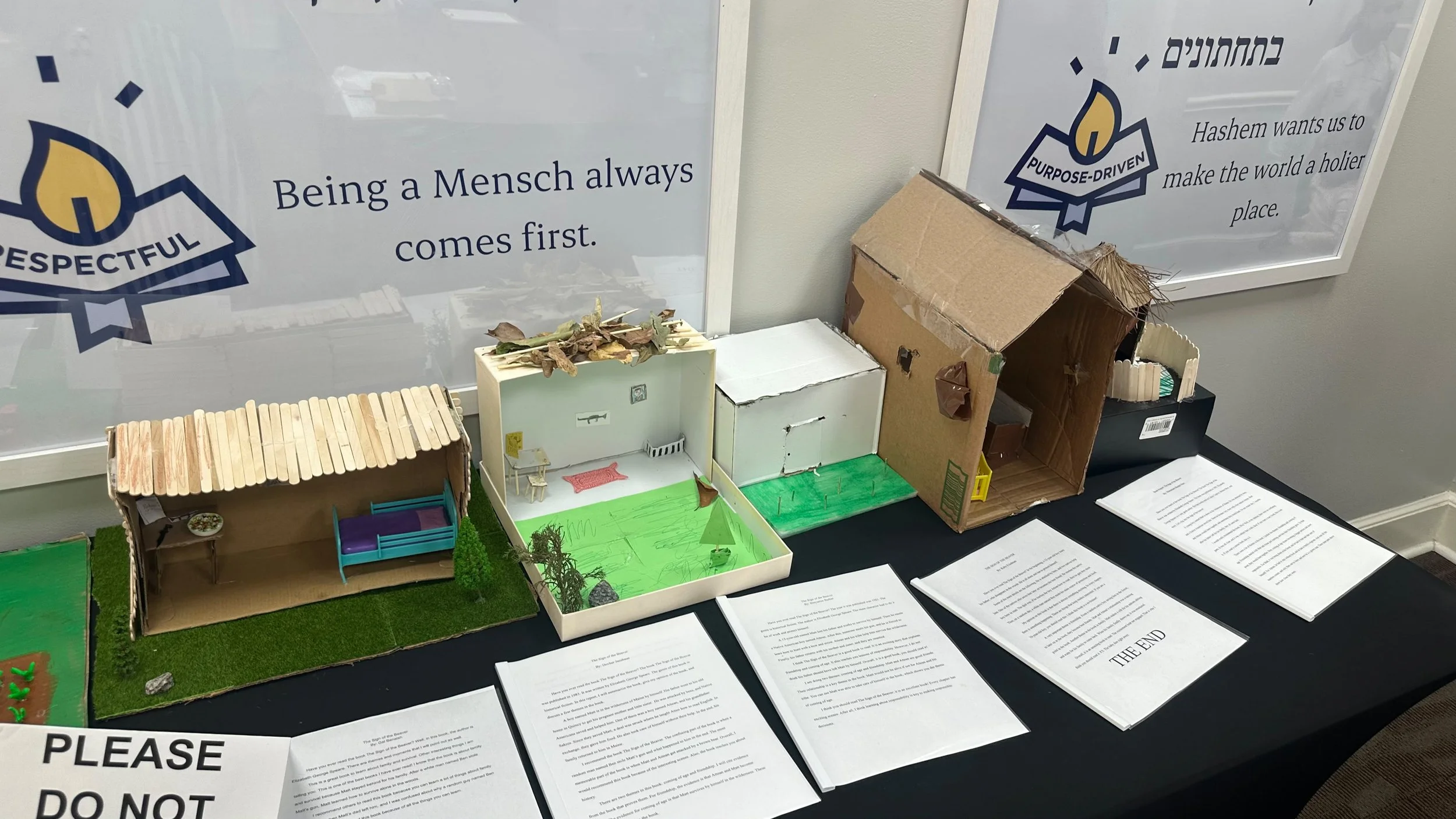
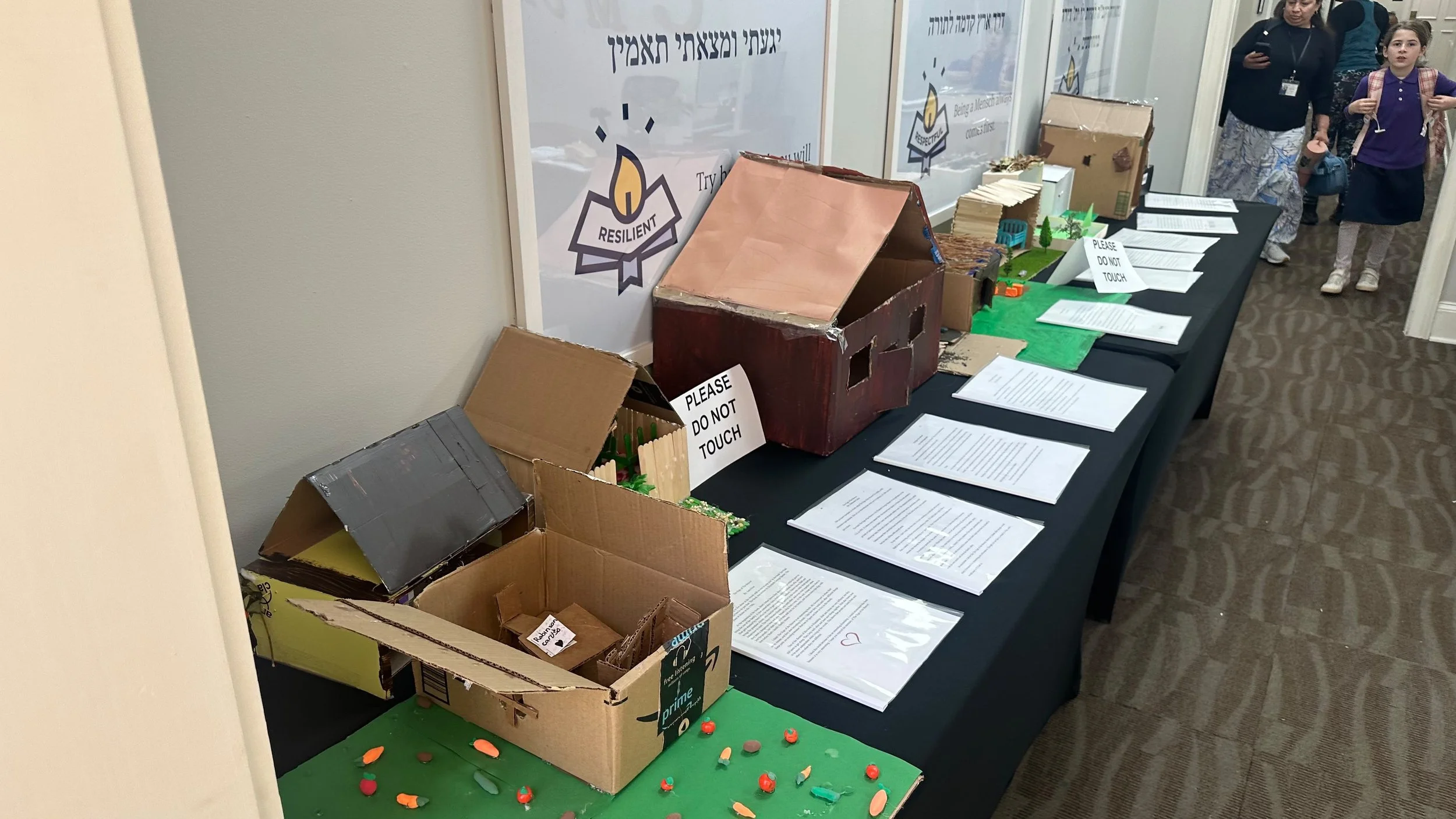
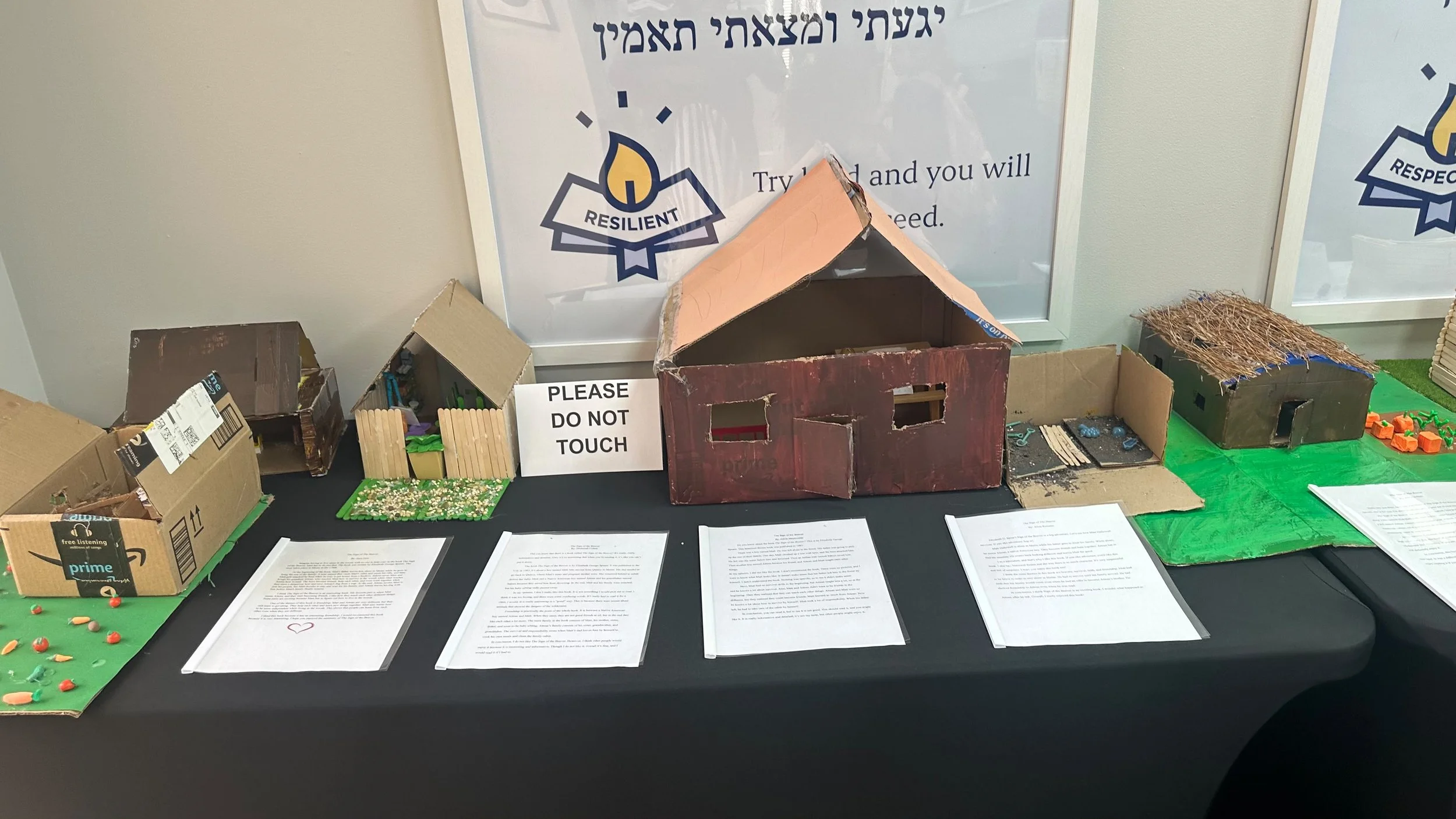
The Sign of the Beaver Cabin Project
The 5th-grade students brought their novel study of The Sign of the Beaver by Elizabeth George Speare to life through a hands-on cabin-building project! Working in partner groups, students designed and built their own cabins inspired by the story. Each student also wrote an individual book report demonstrating their understanding of the novel’s characters, themes, and events. This project combined creativity, collaboration, and literacy to create a memorable learning experience!
A big thank you to our fabulous 5th-grade teacher, Ms. Venci!
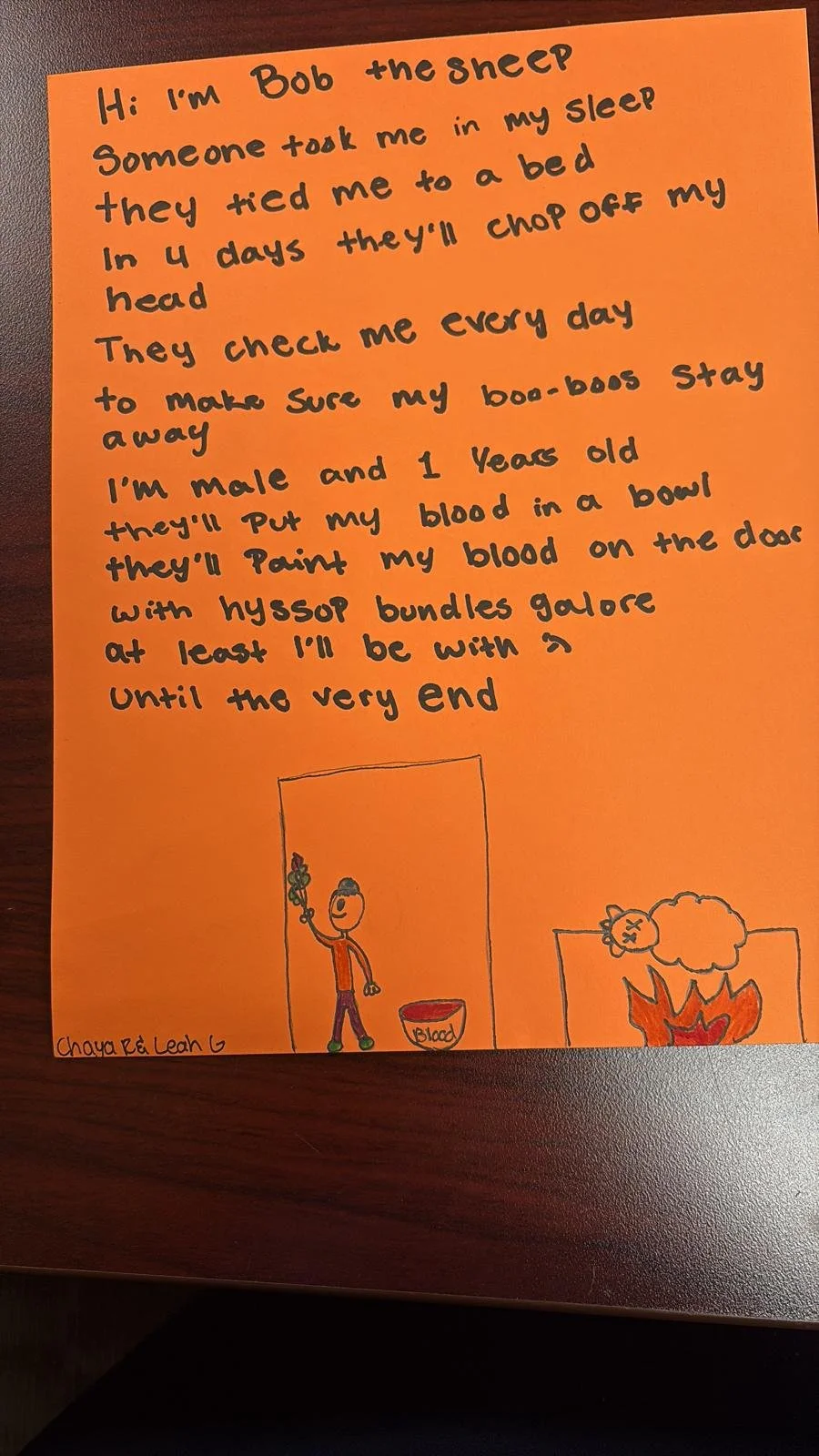
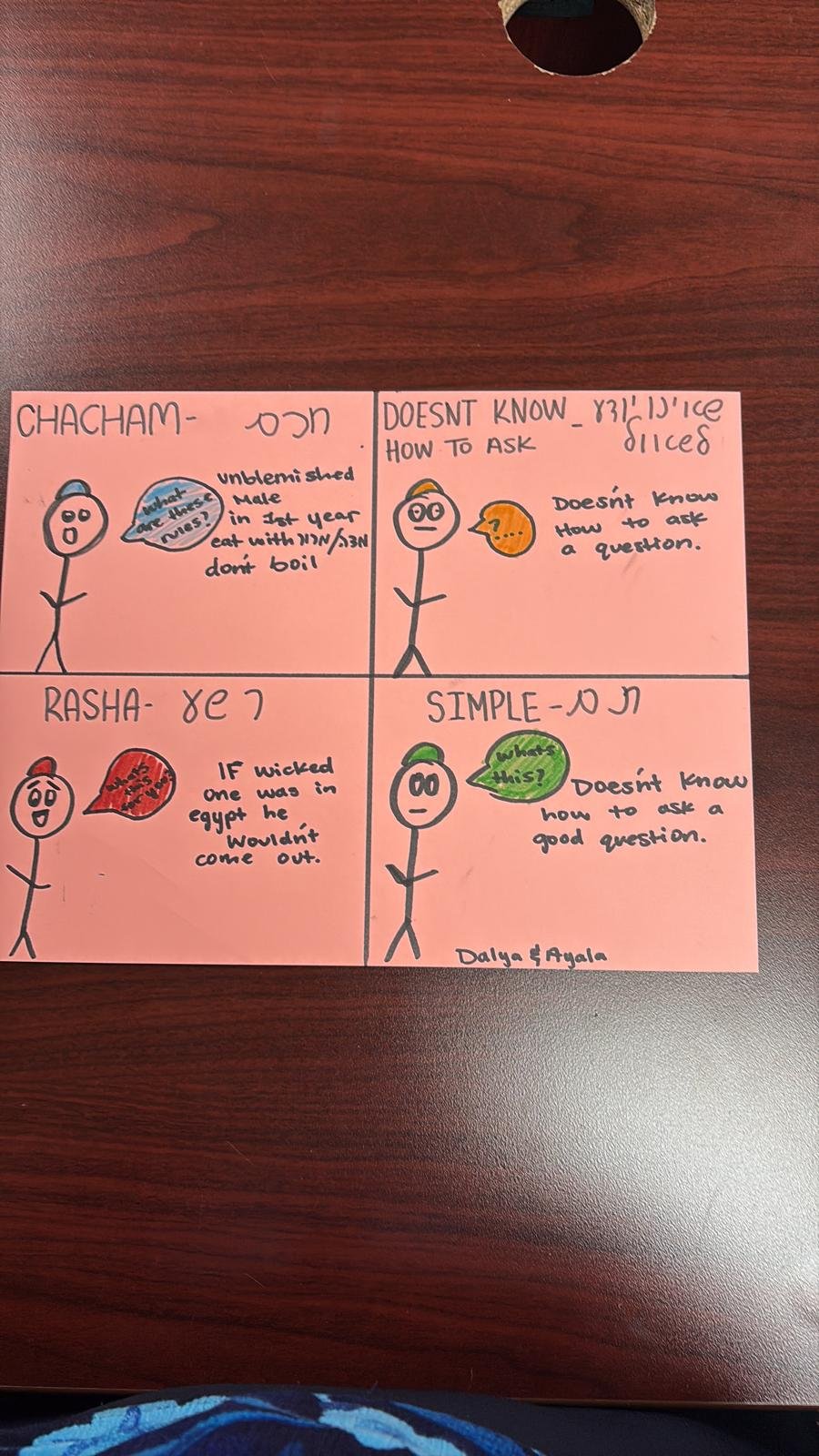
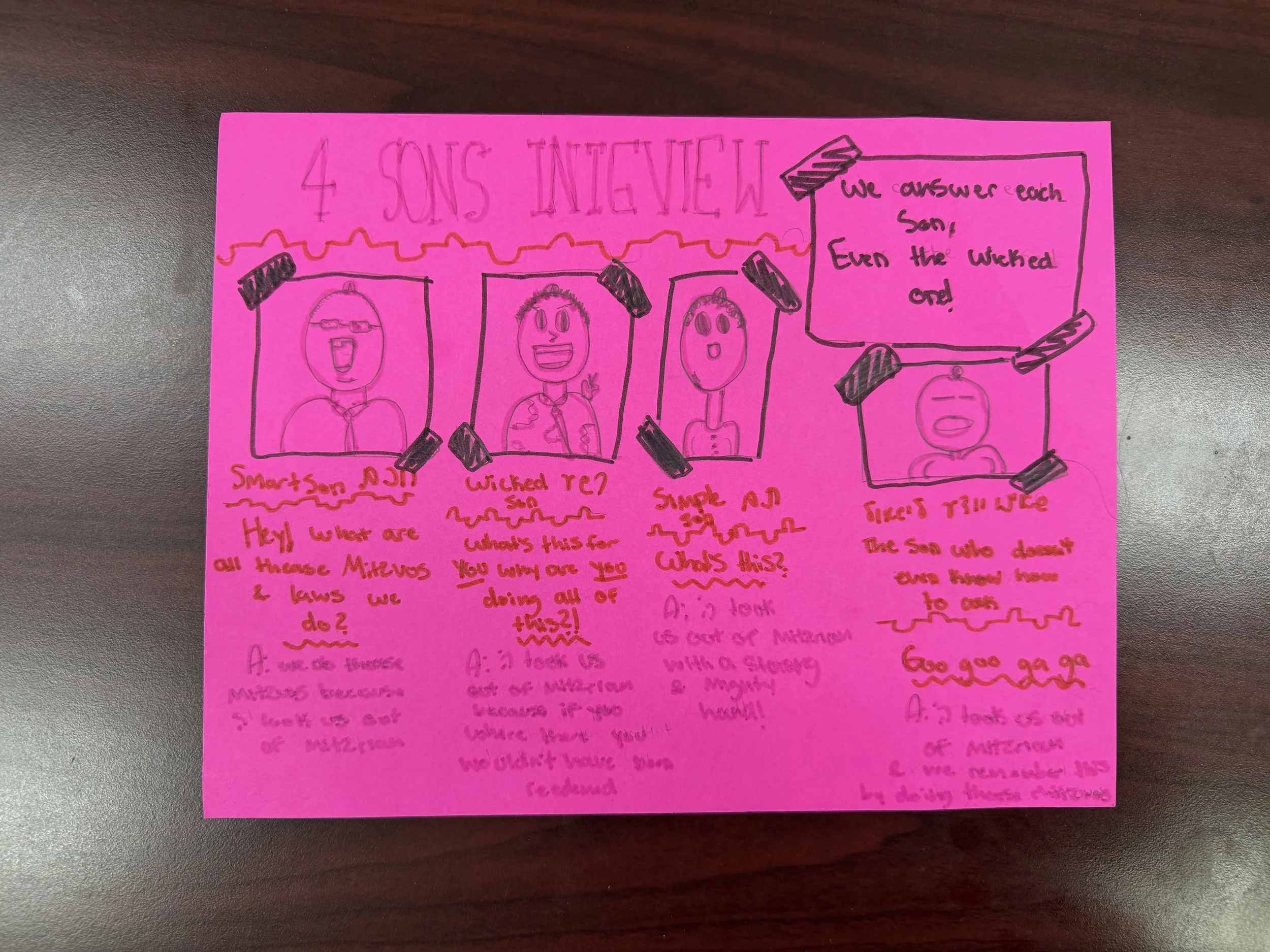
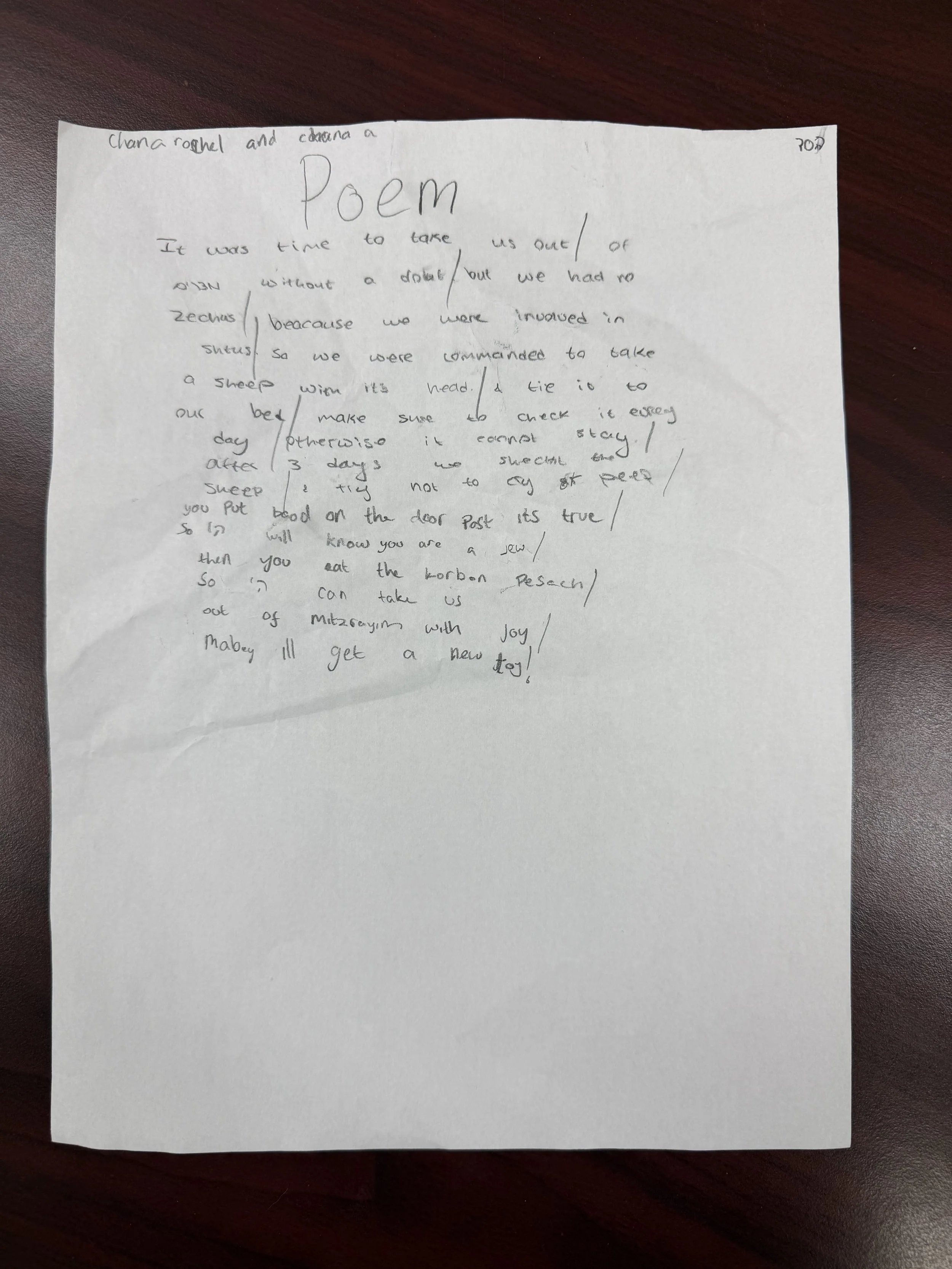
Parshas Bo Comes to Life
After completing Parshas Bo, Mrs. Freeman’s students are putting their knowledge into action through creative projects that help them apply what they’ve learned. These hands-on activities give the students an opportunity to express their understanding of the parsha in fun and meaningful ways.
A special shout-out to Mrs. Freeman for bringing Parshas Bo to life in the classroom!
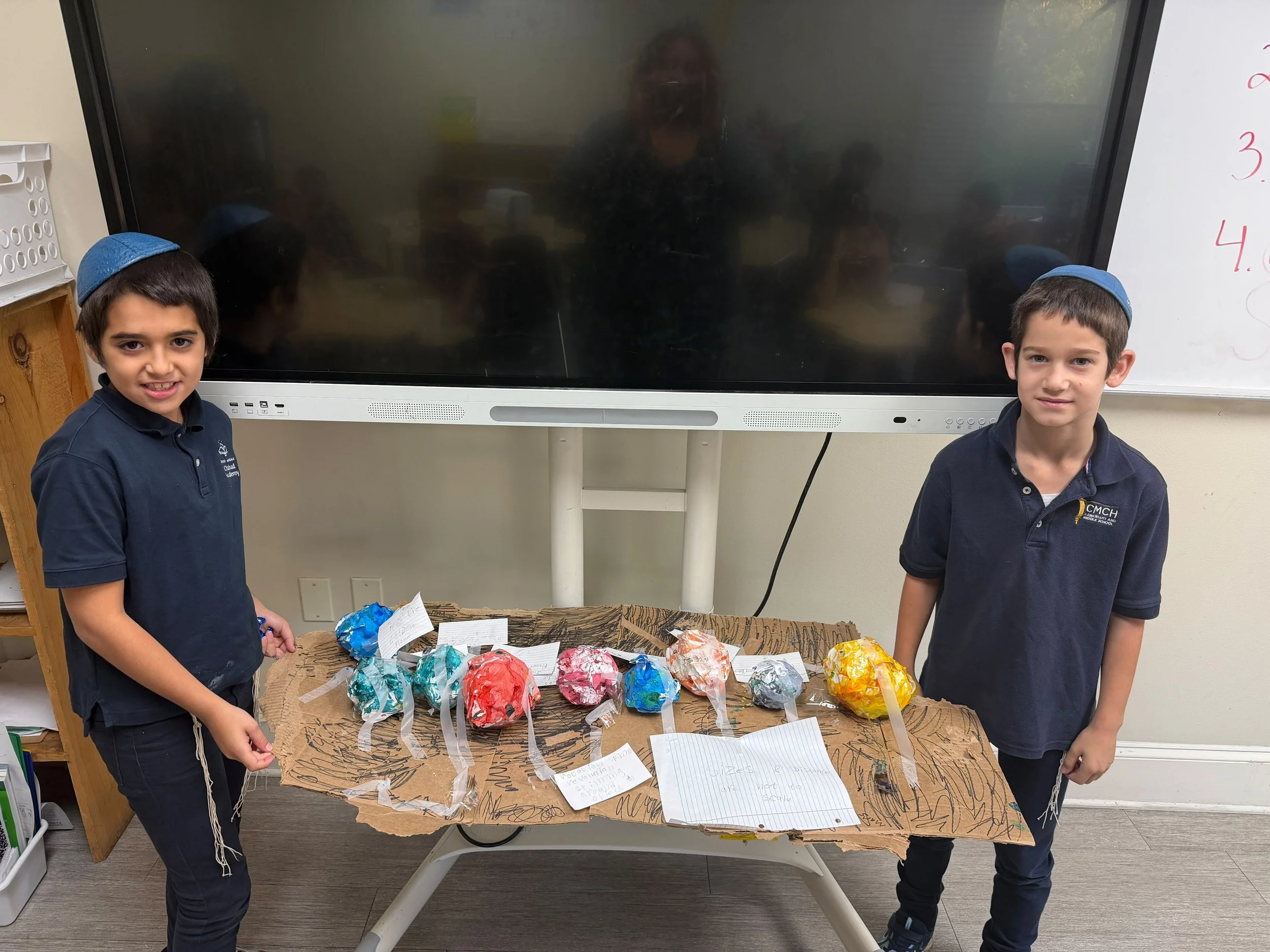
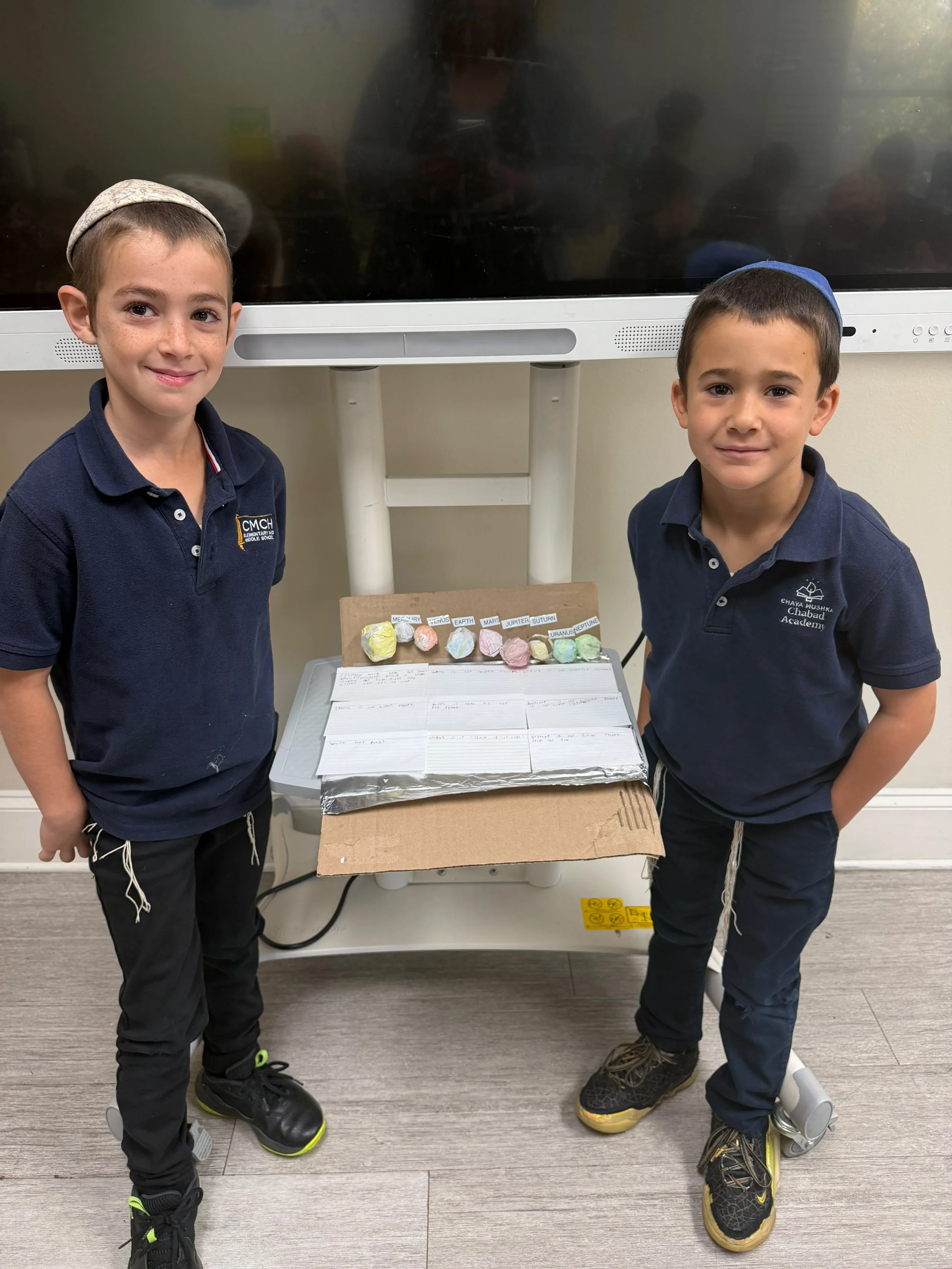
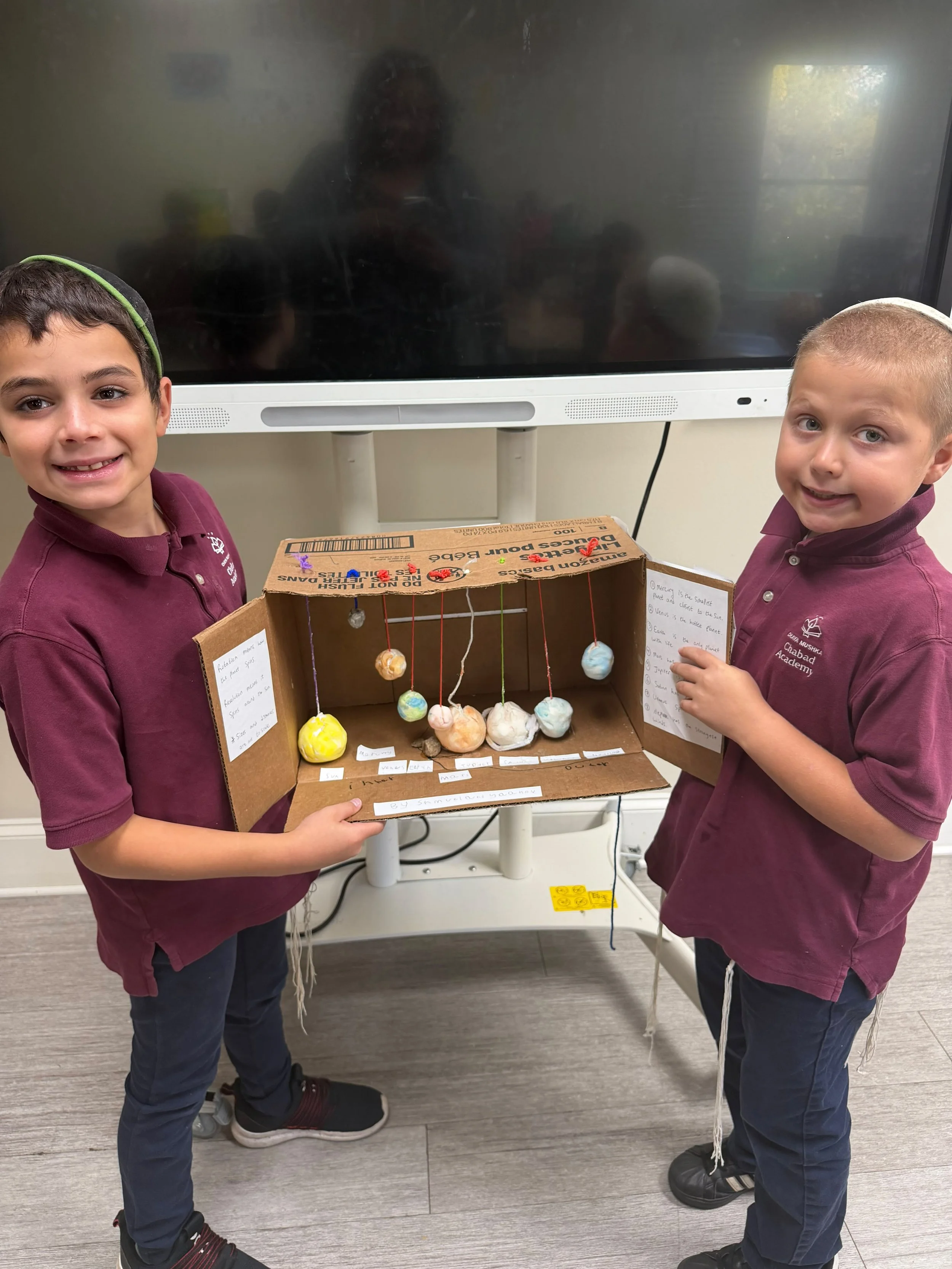
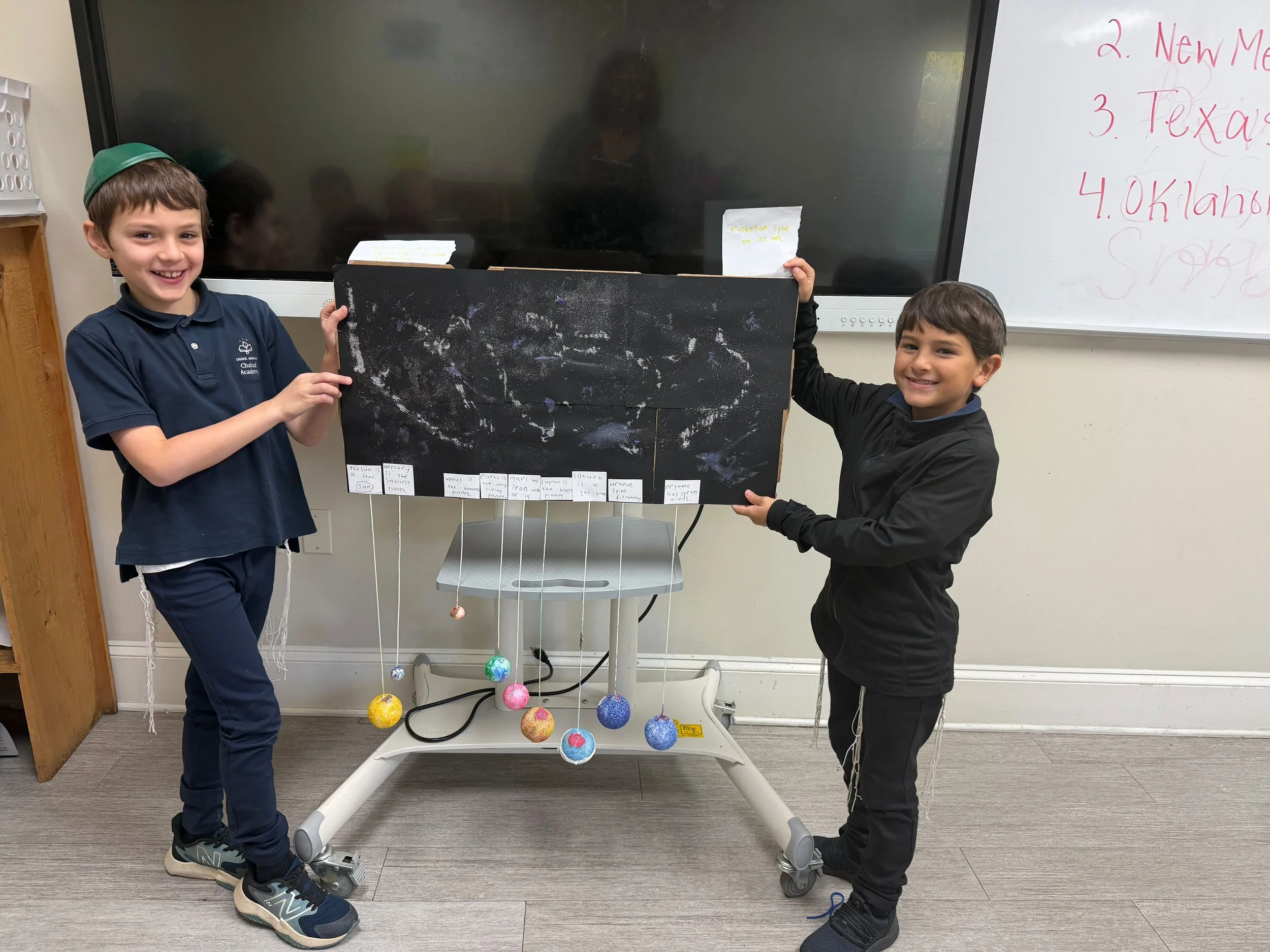
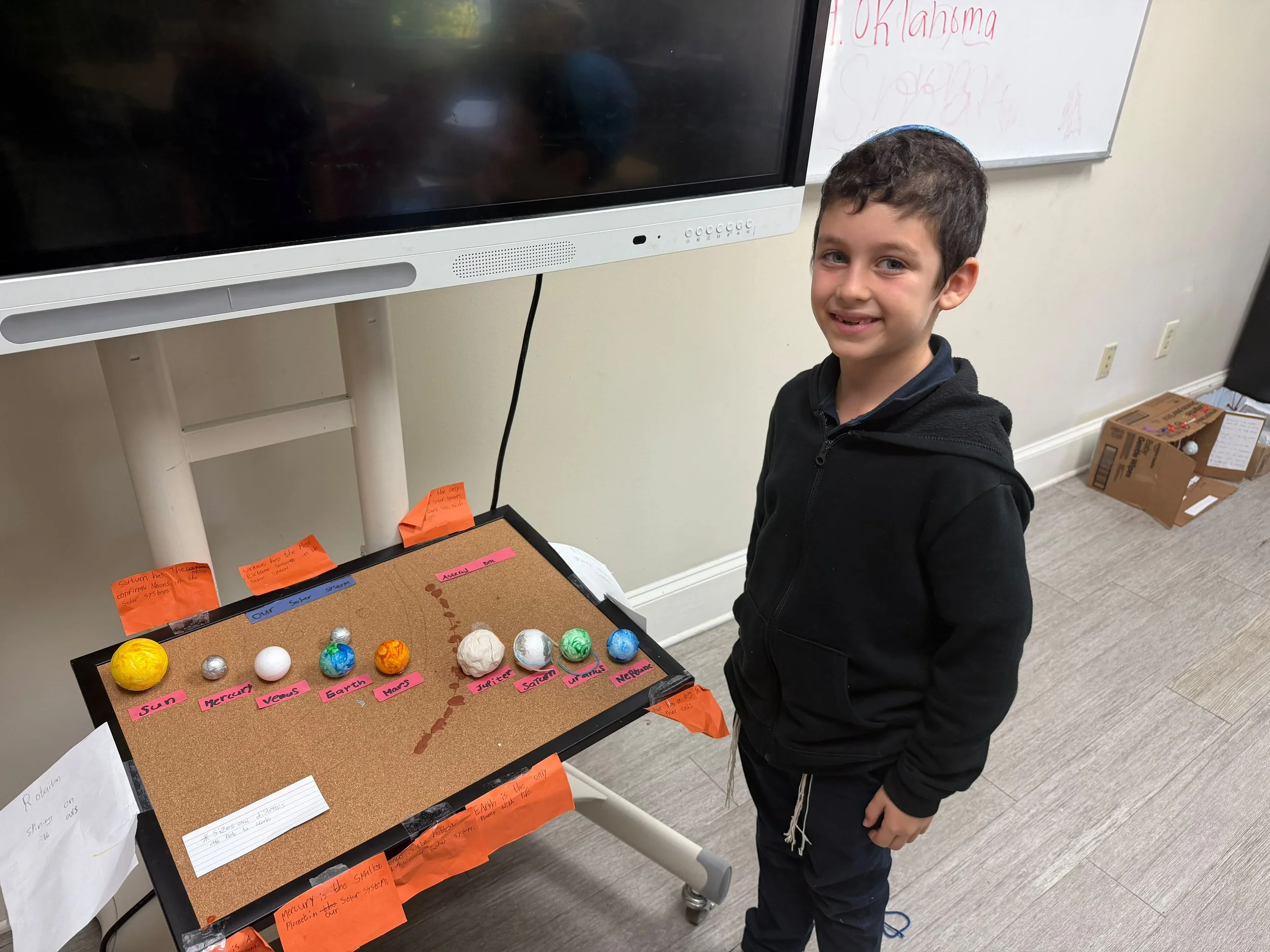
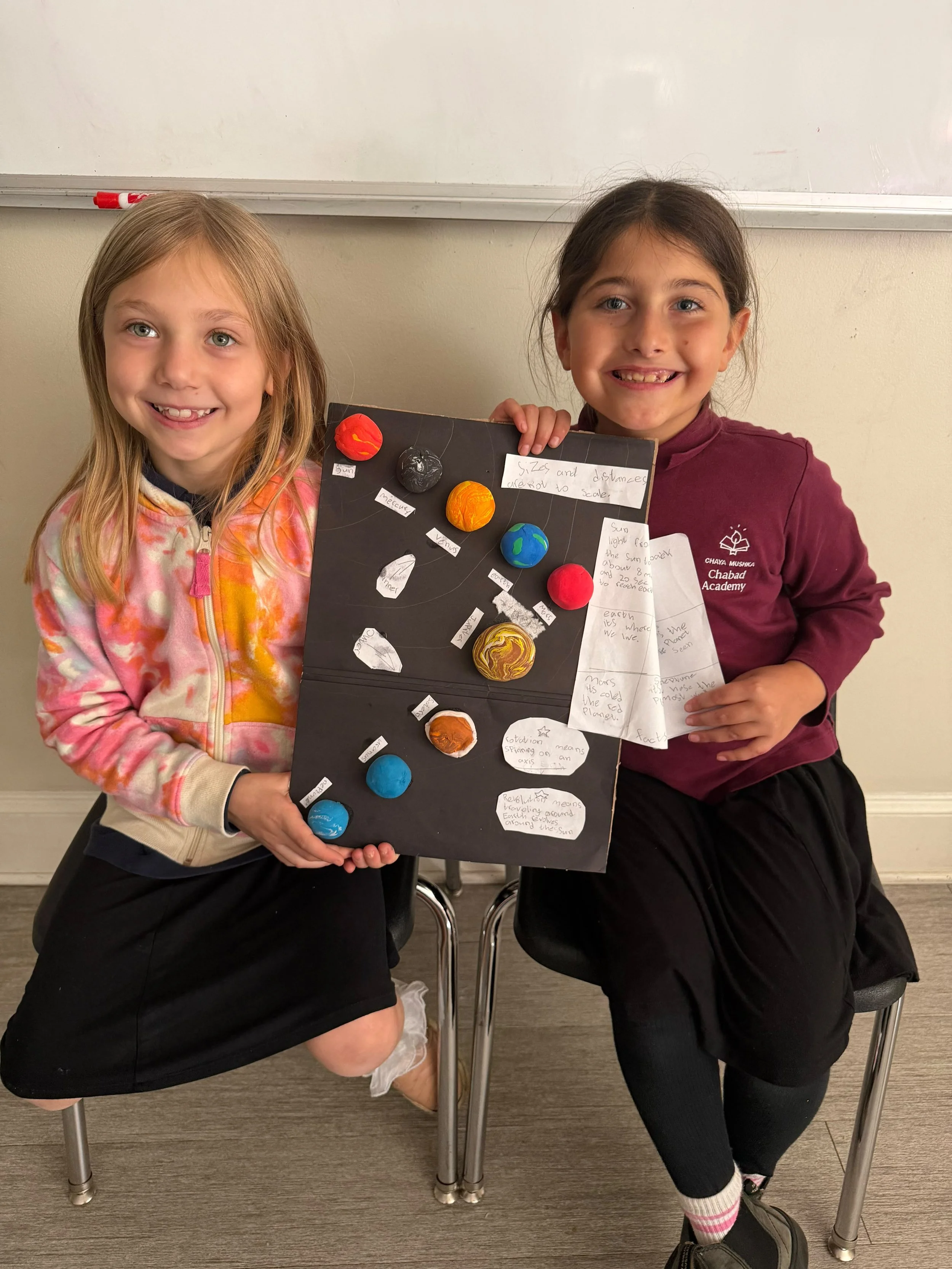
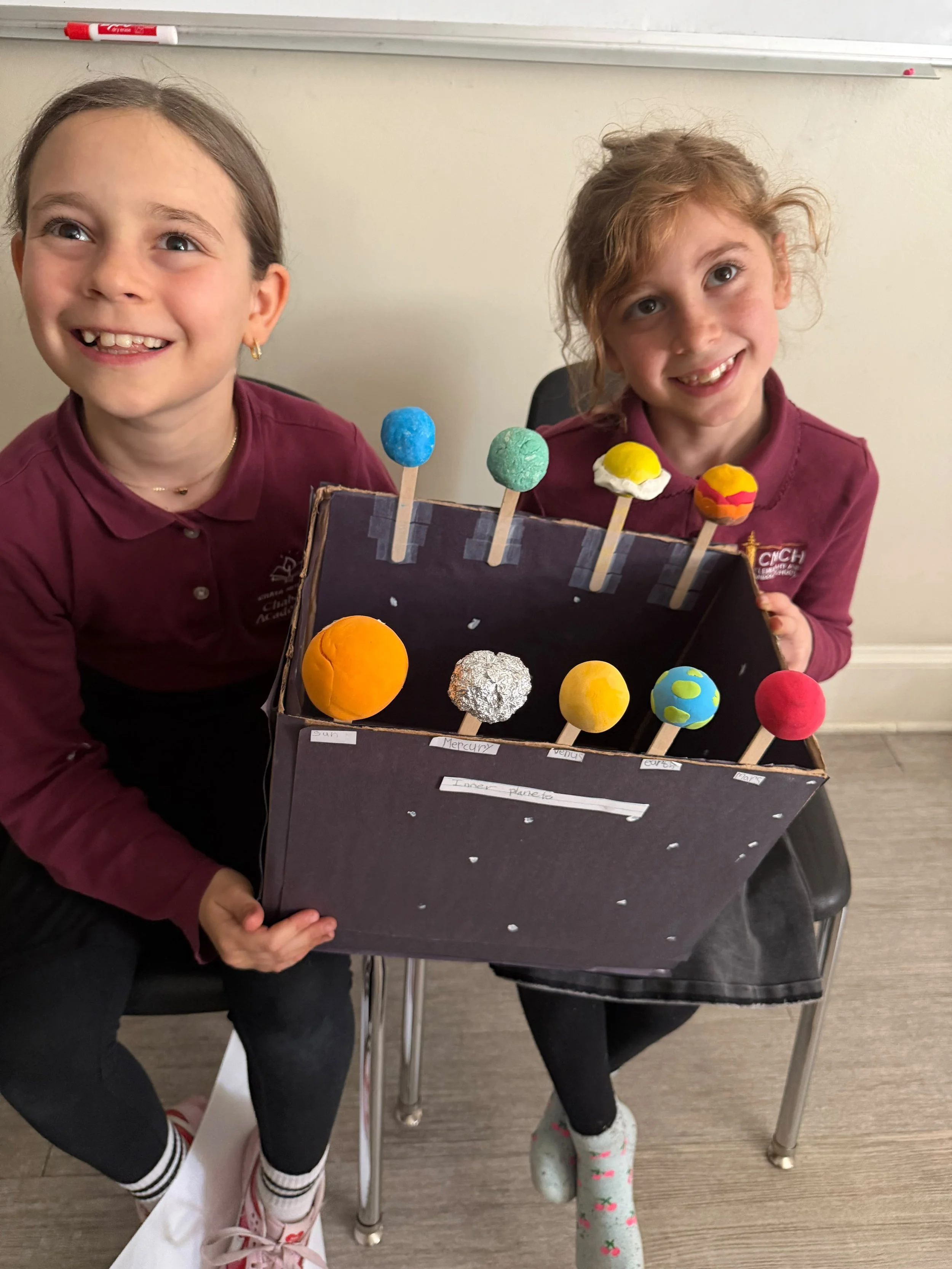
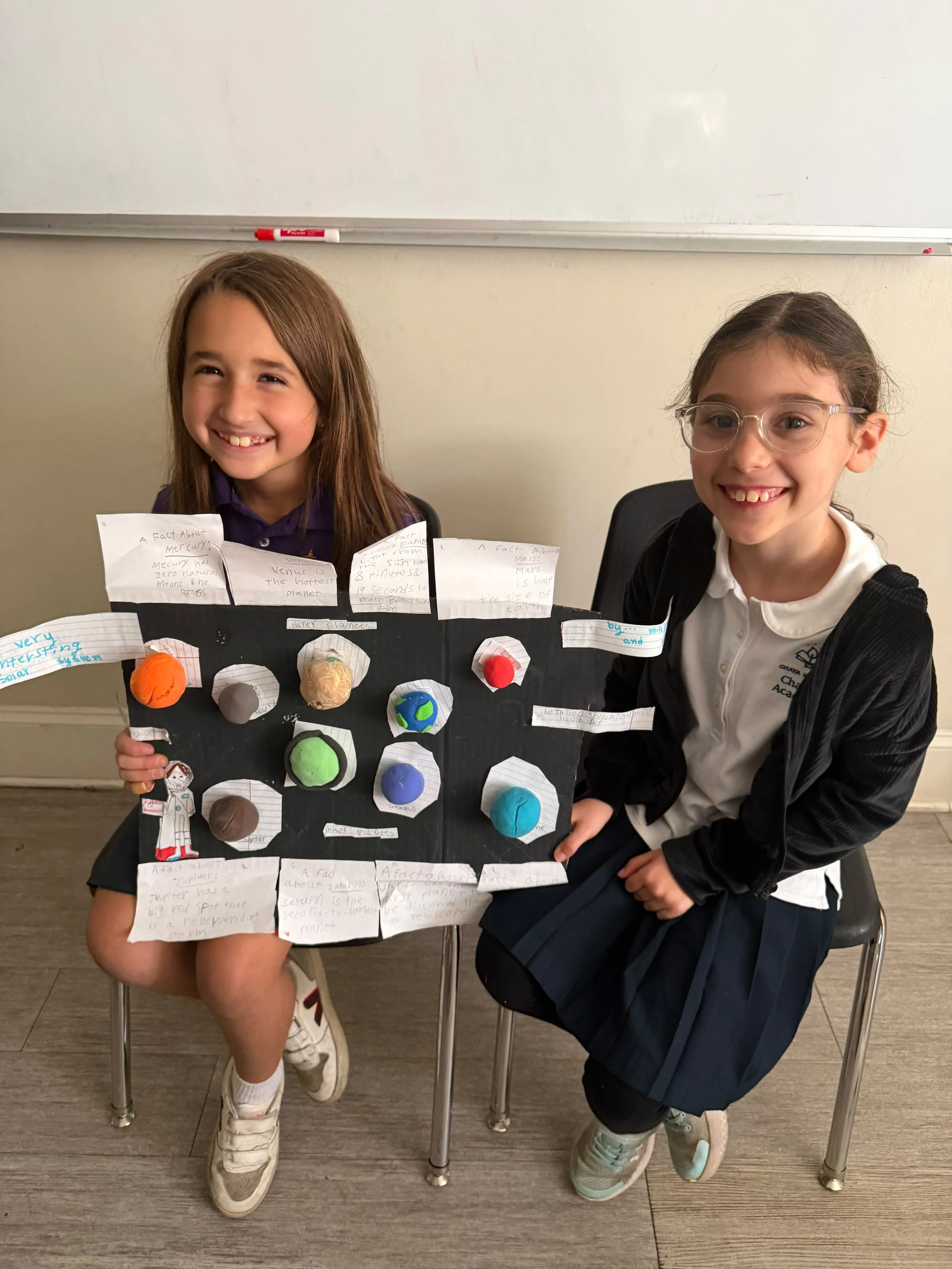
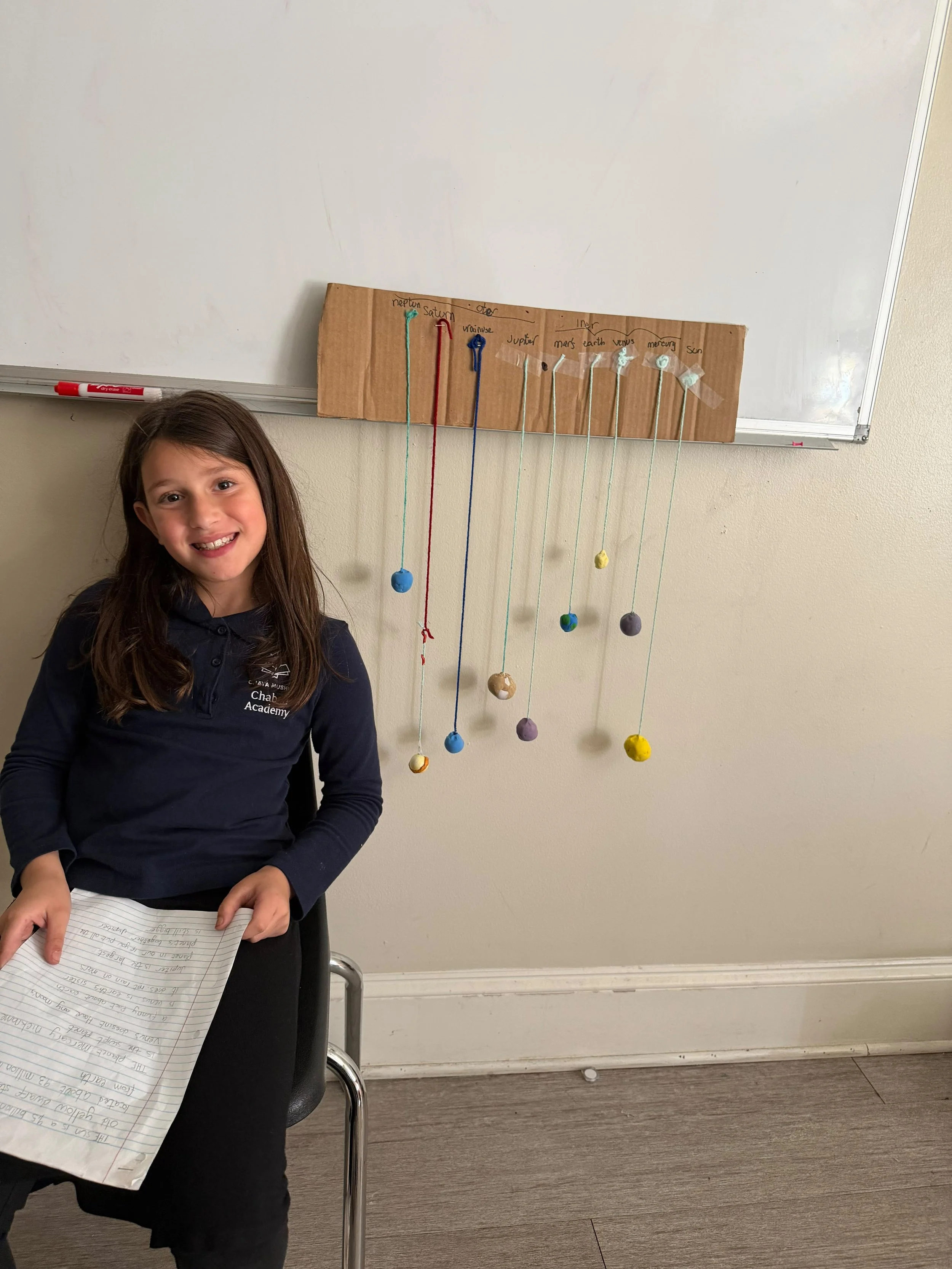
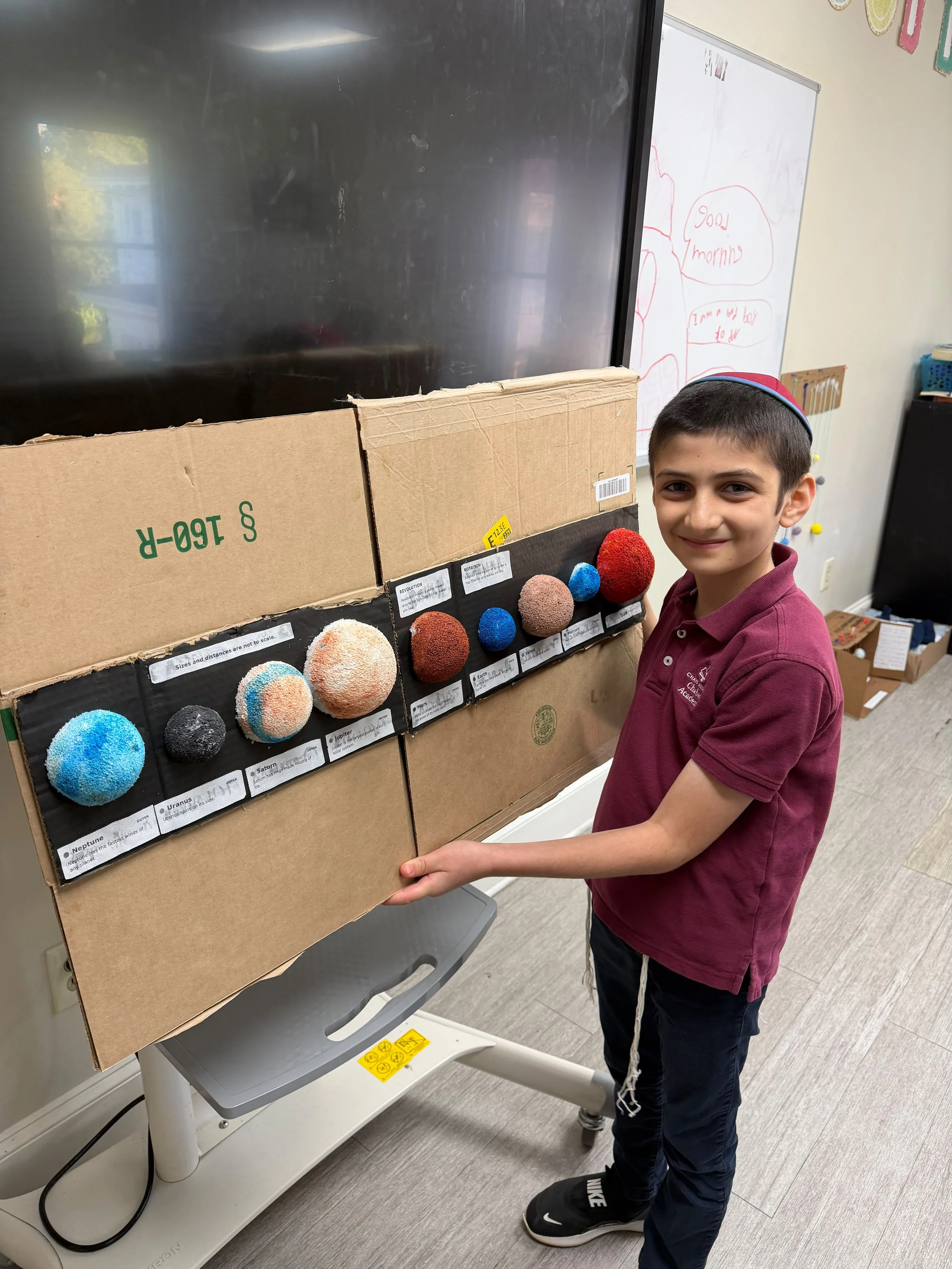
Our Solar System in 3-D: A Planetary Project
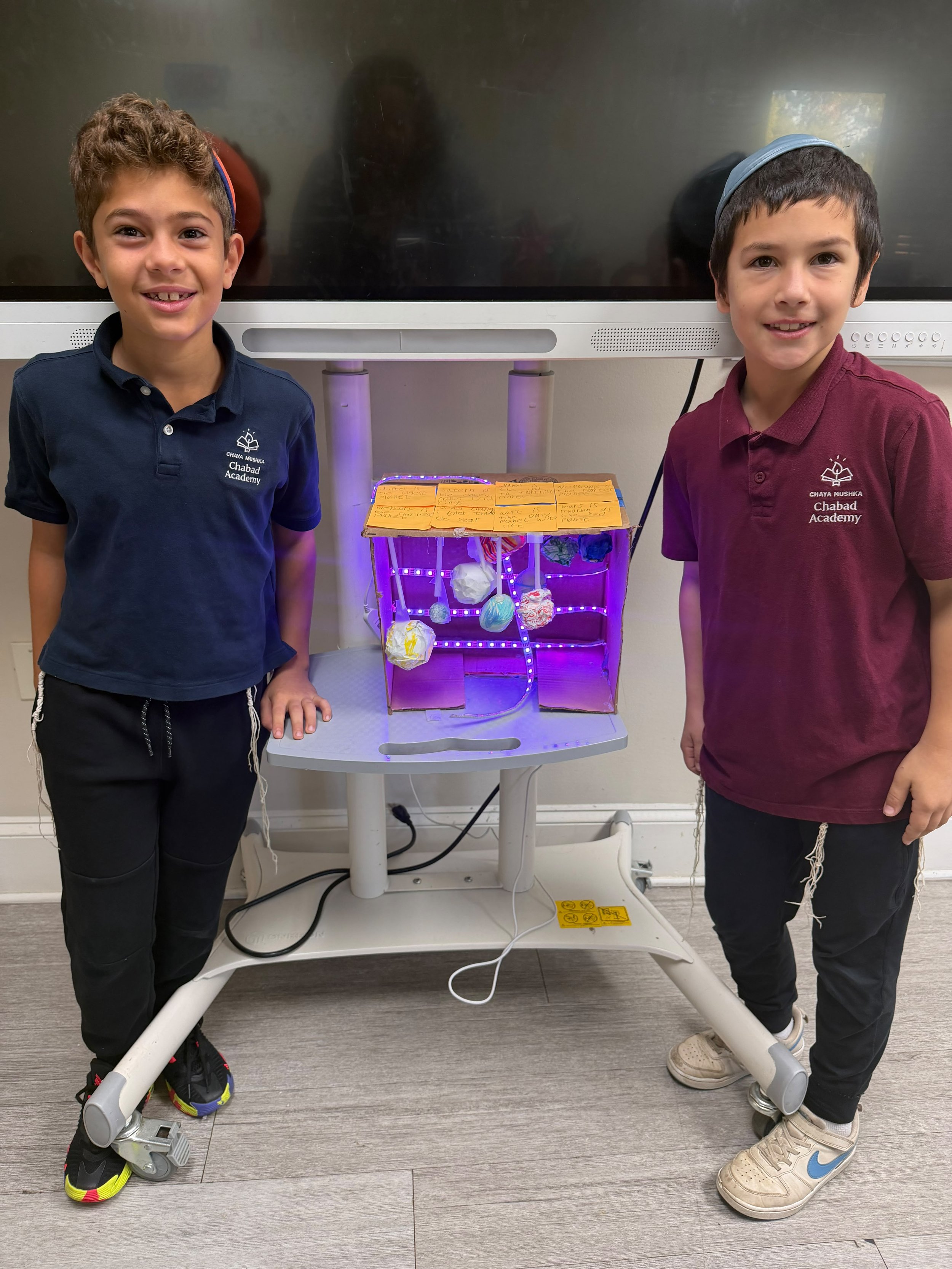
During our solar system unit, students learned about the eight planets, their order from the Sun, and how Earth’s rotation causes day and night. They also explored the Moon’s phases and how its appearance changes as it travels around Earth.
For their final project, students created a 3-D solar system model to demonstrate their understanding of the planets’ order and key features. The project gave them a creative way to show what they learned about our solar system.
Thank you Ms. Malvo, the students learned so much from creating their solar system models!
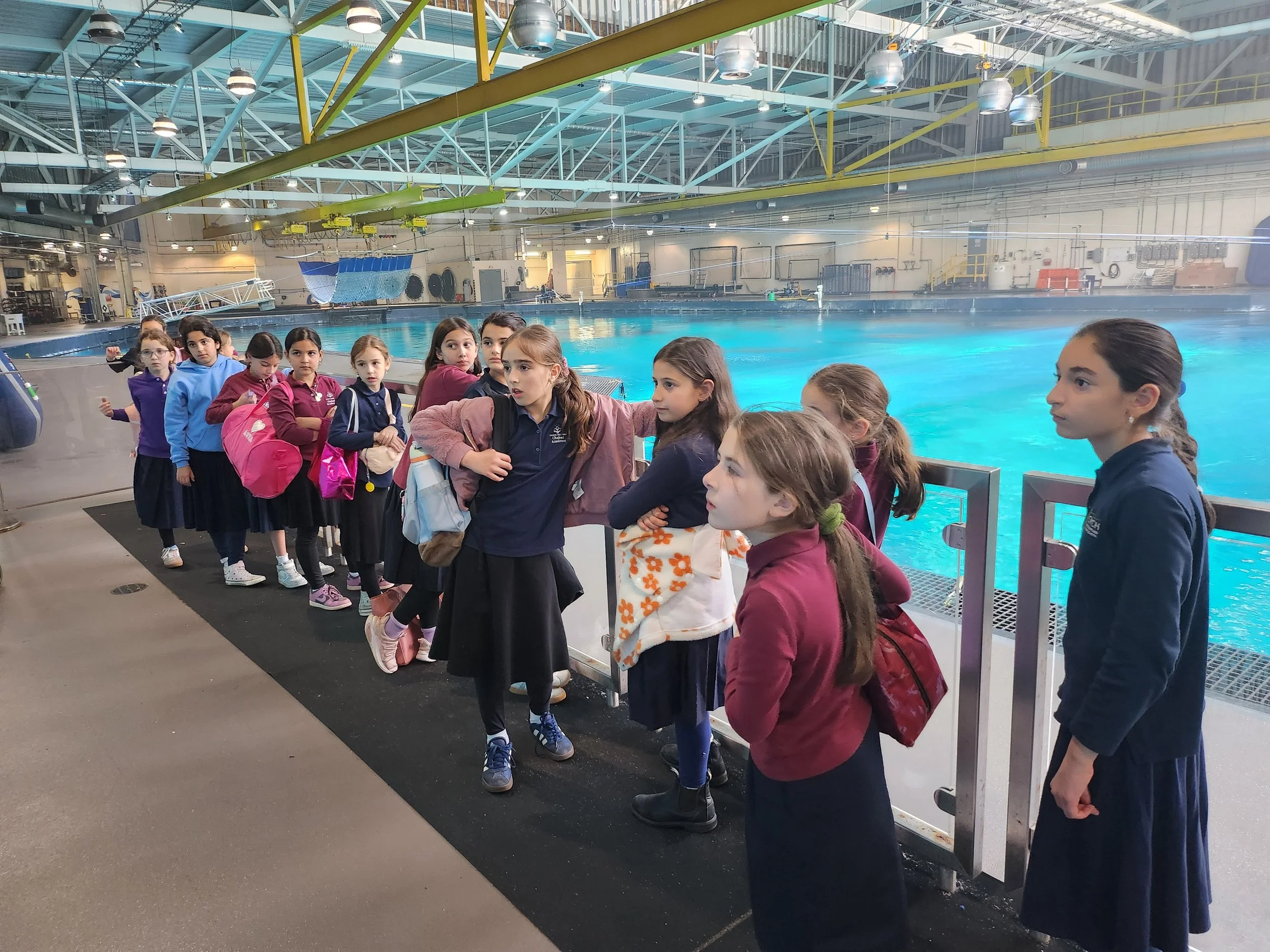
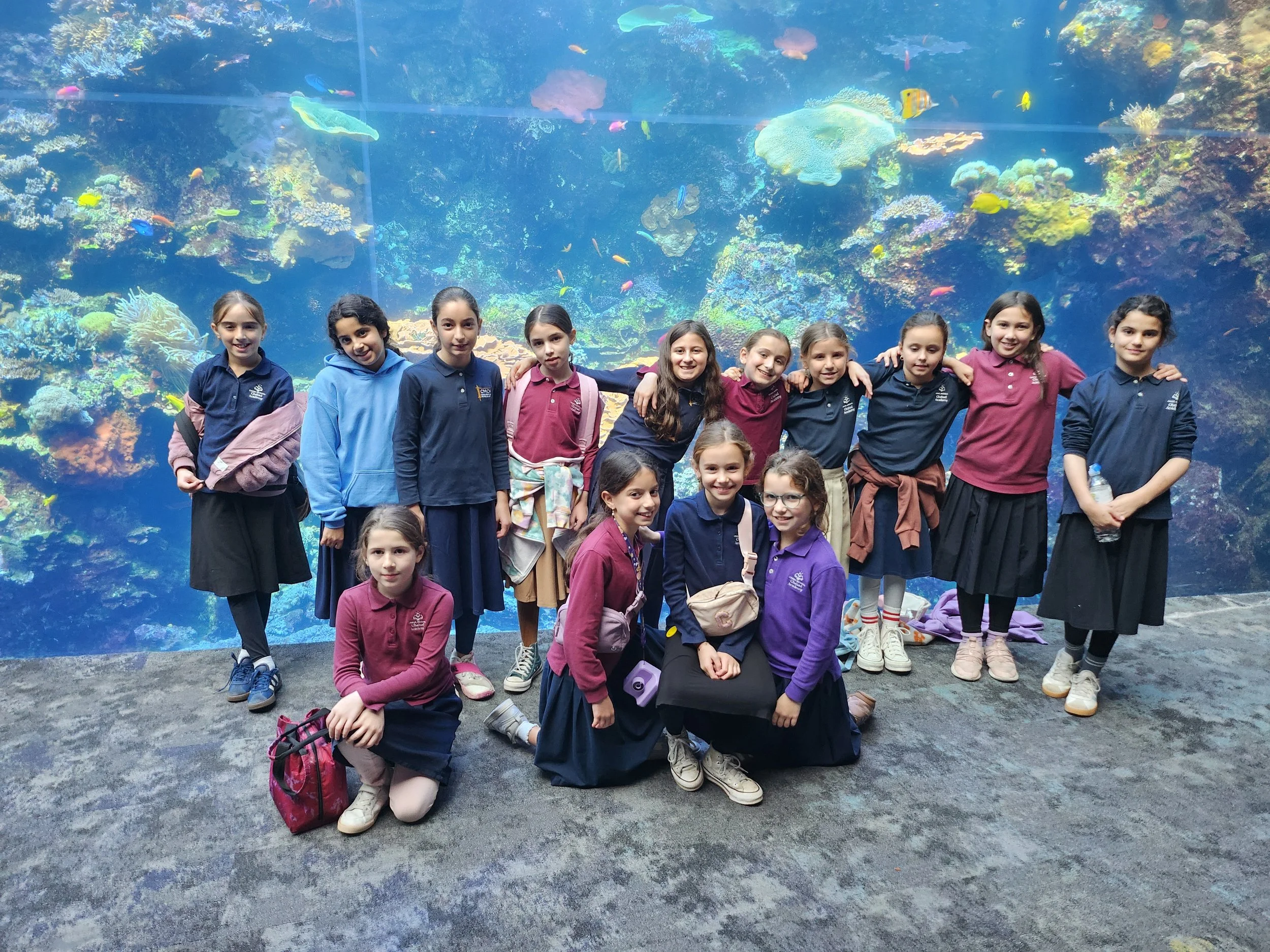
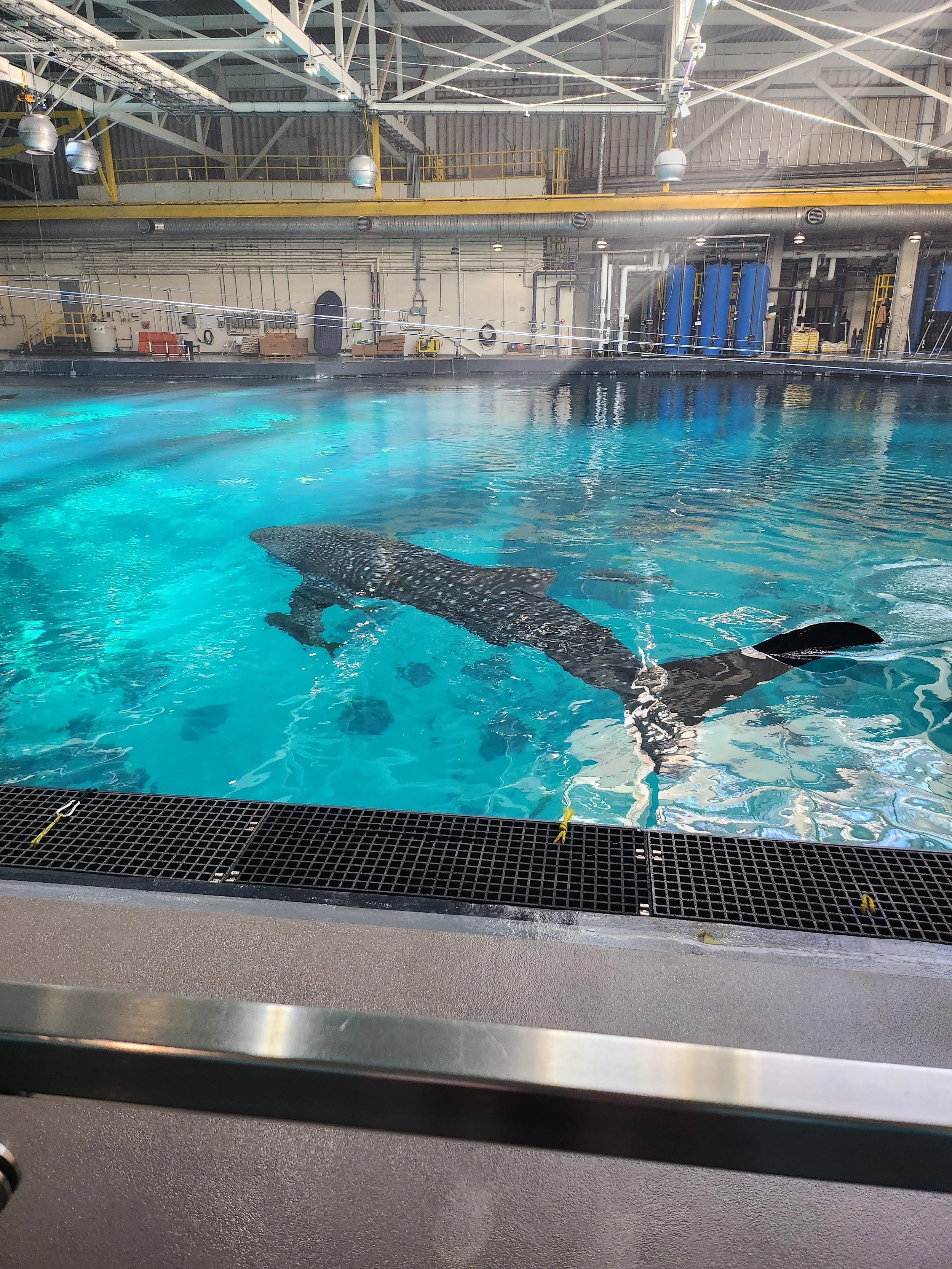
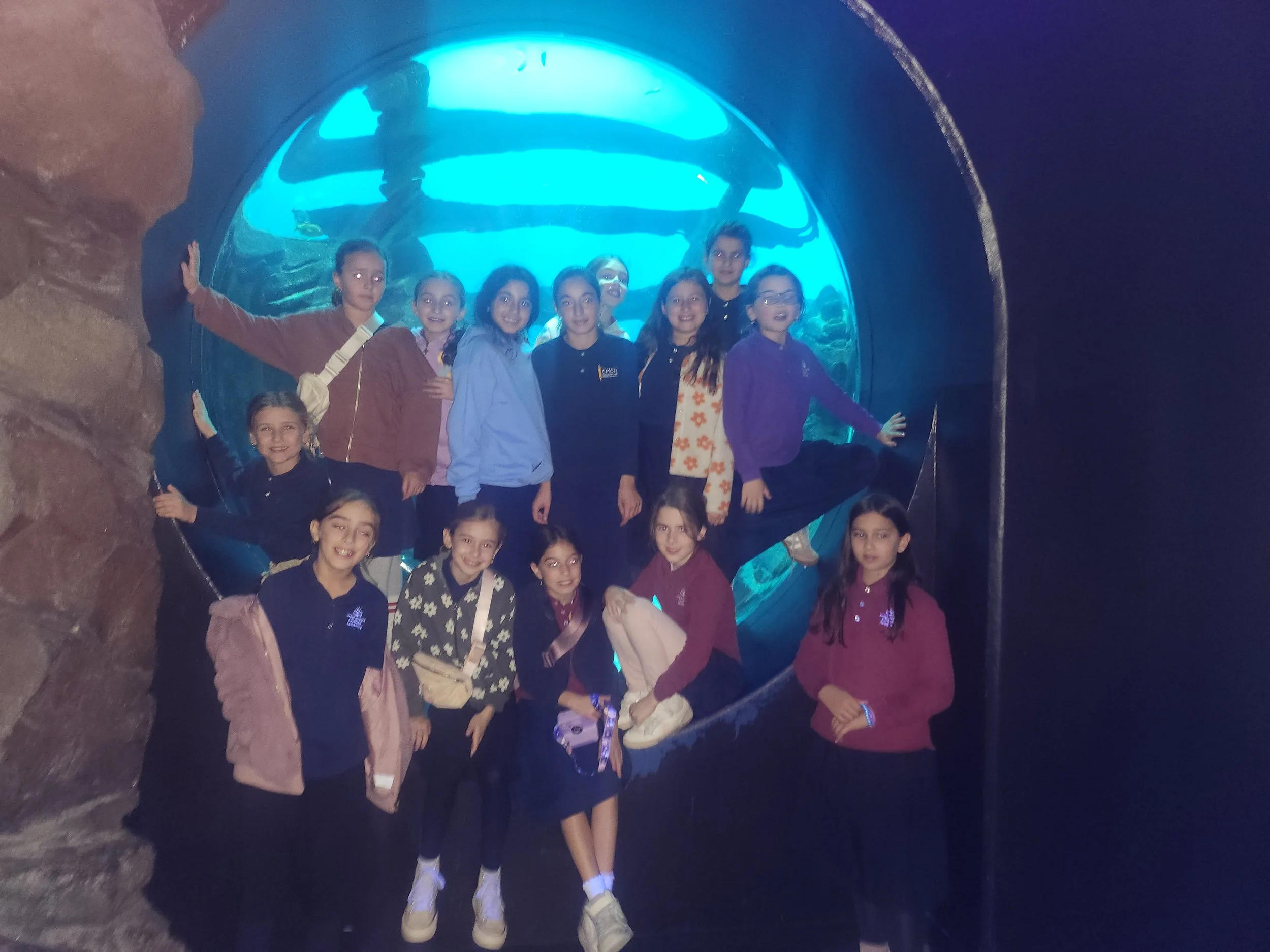
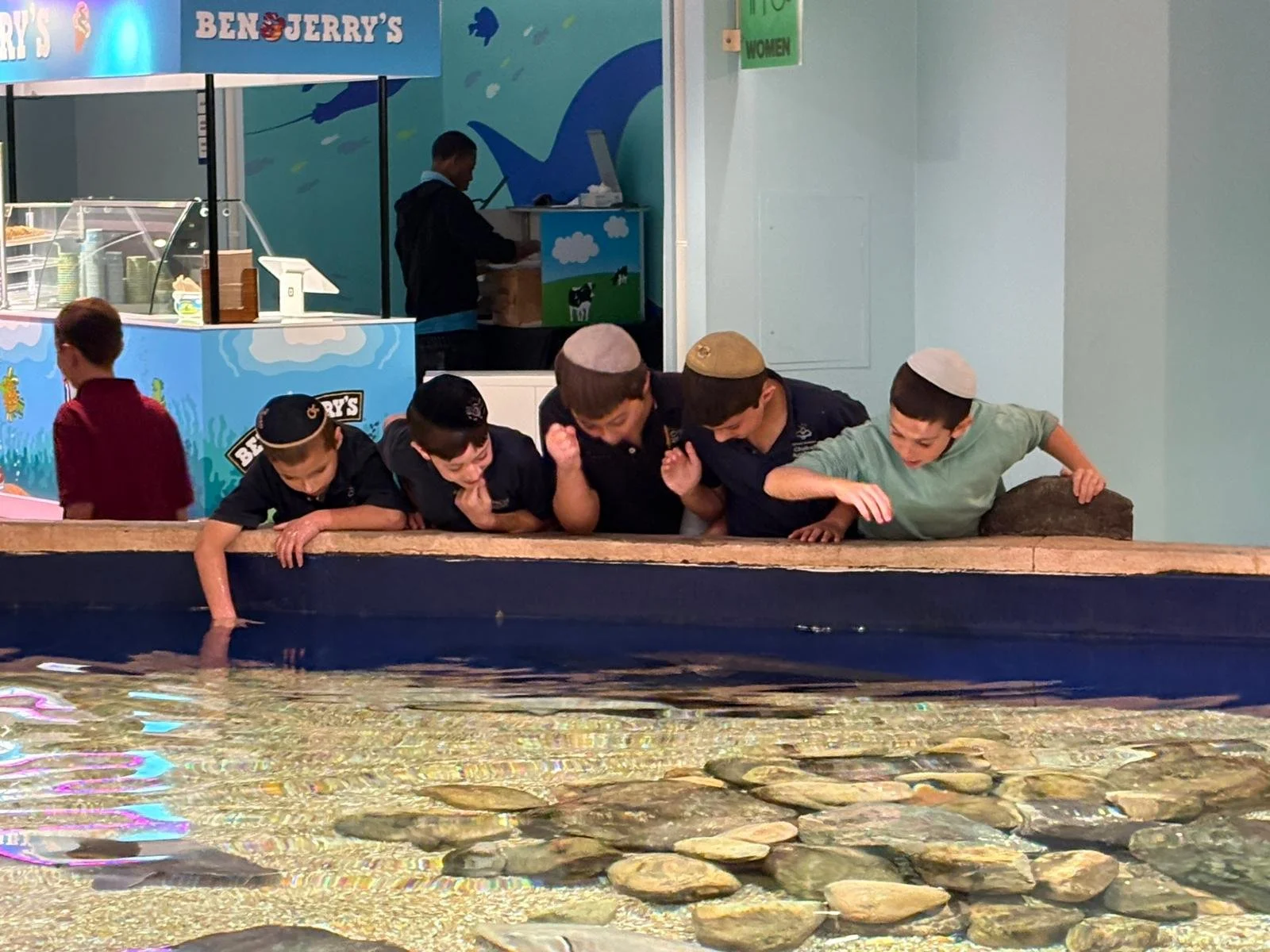
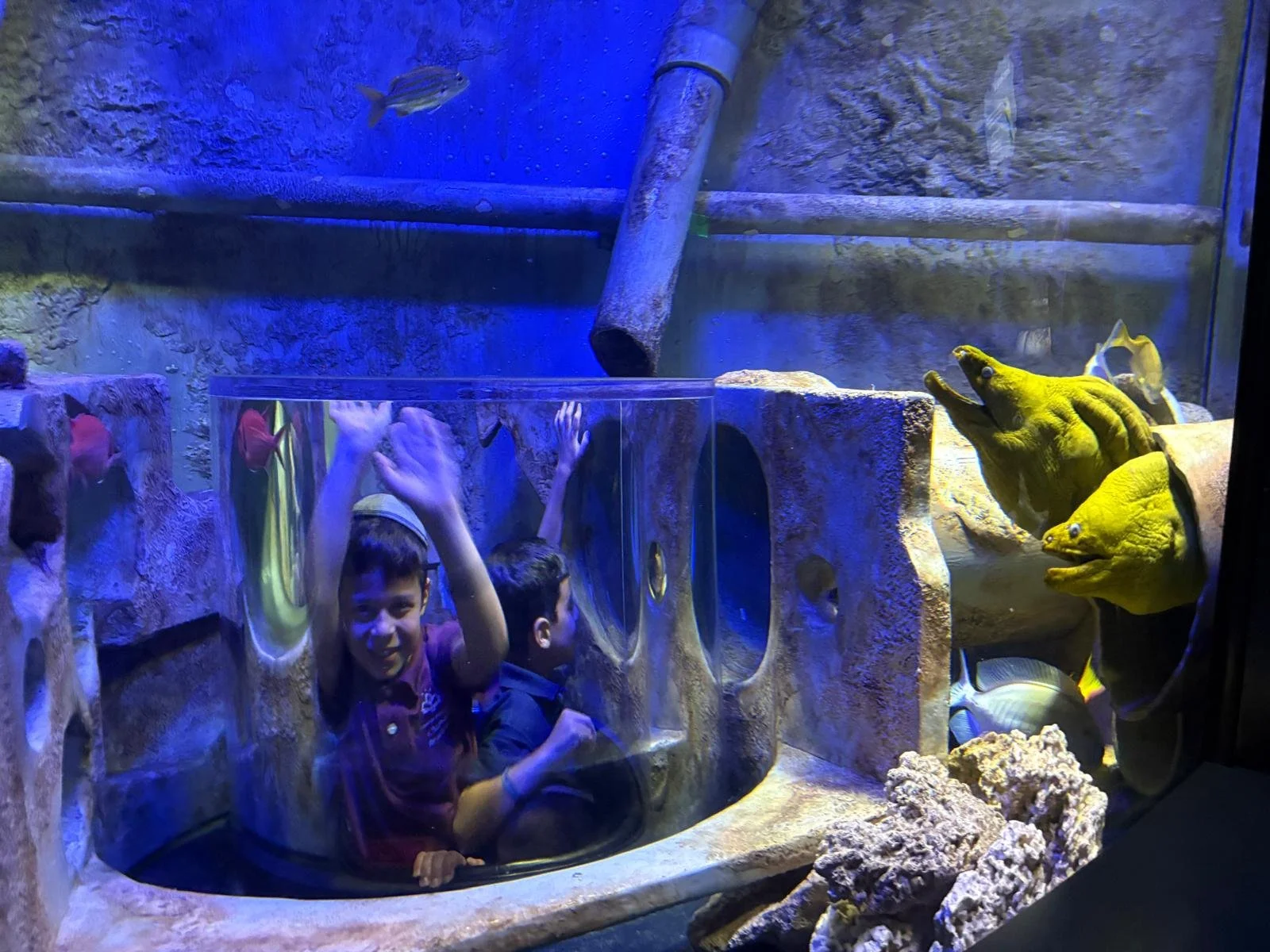
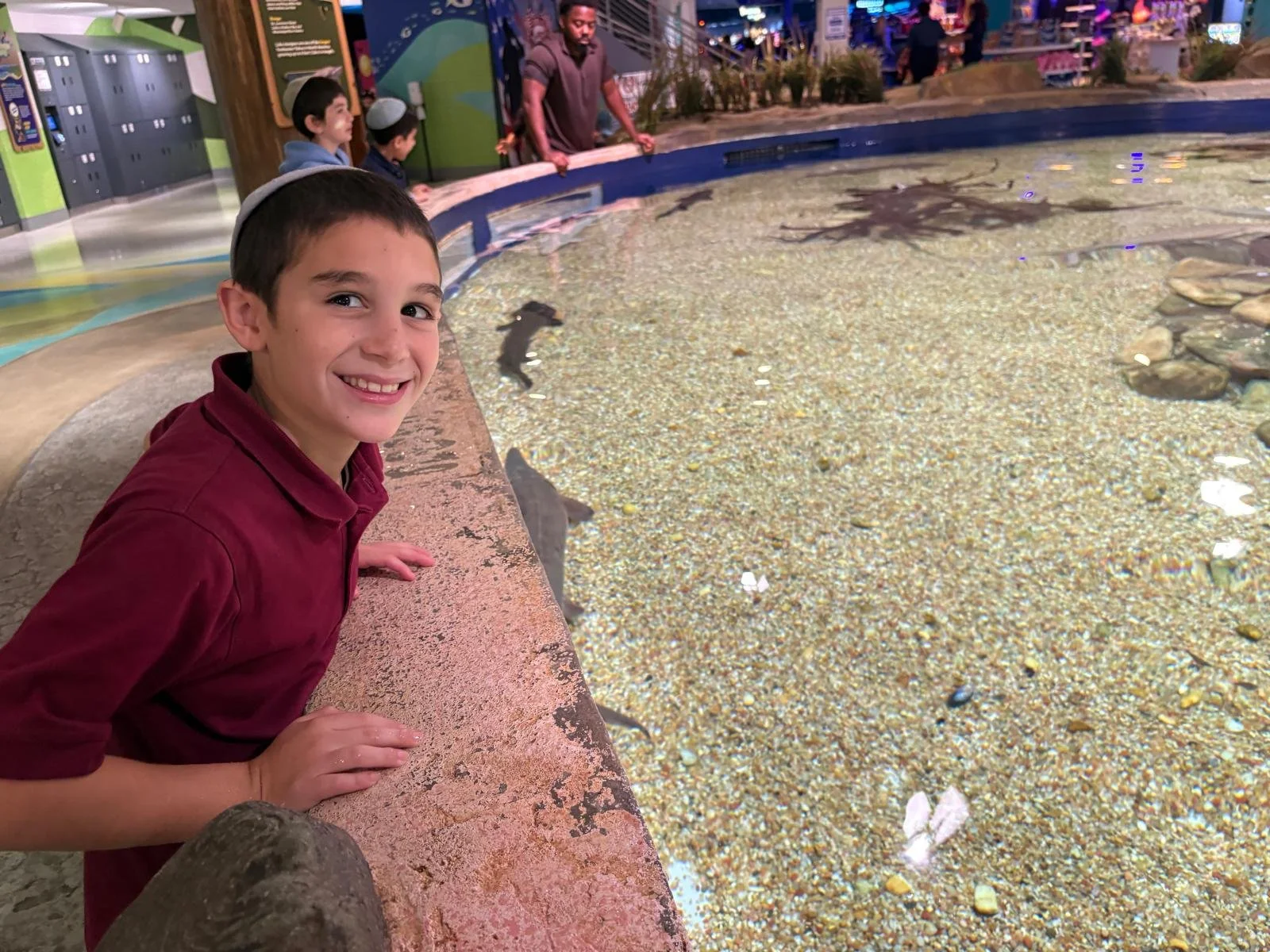
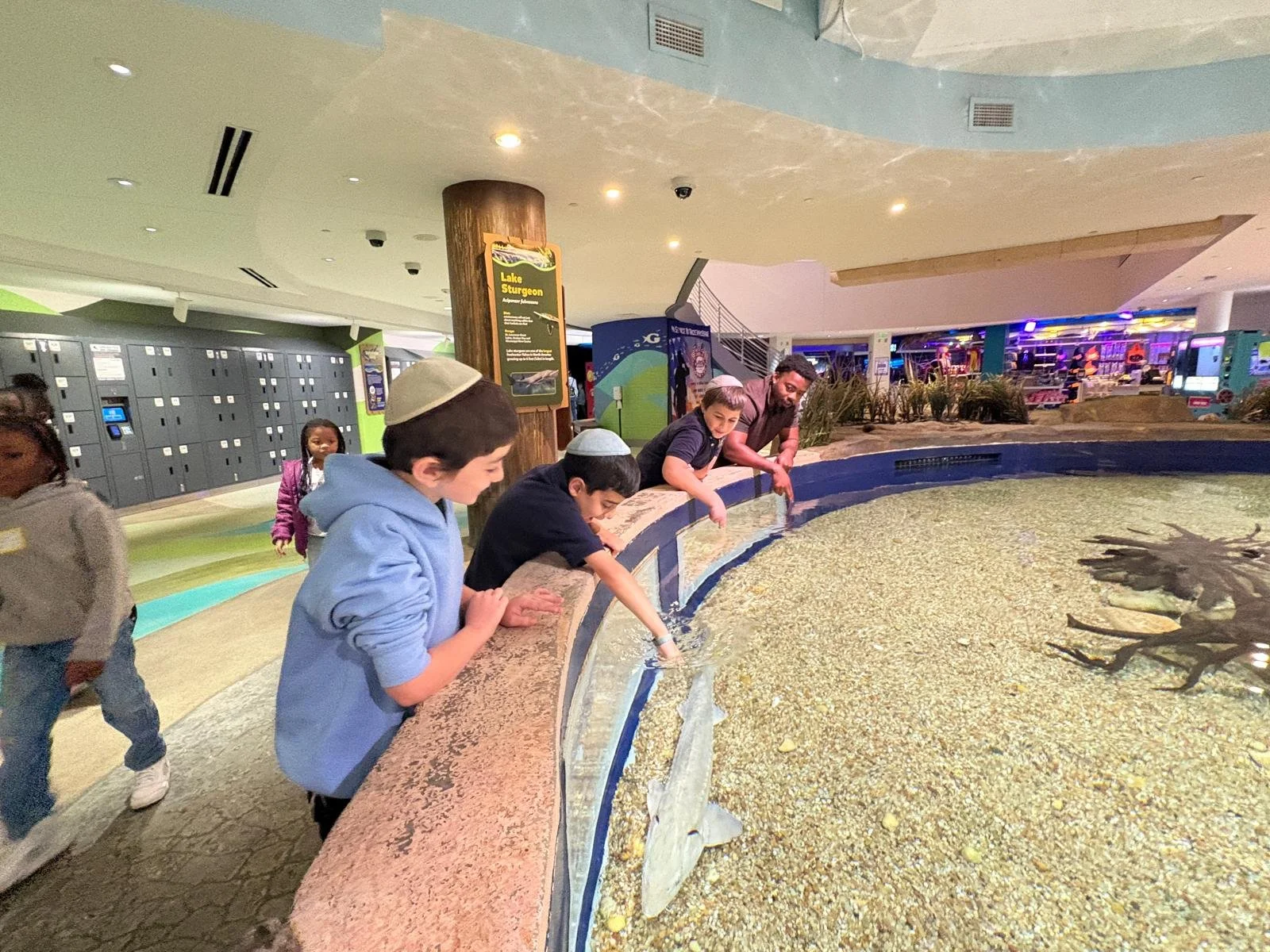
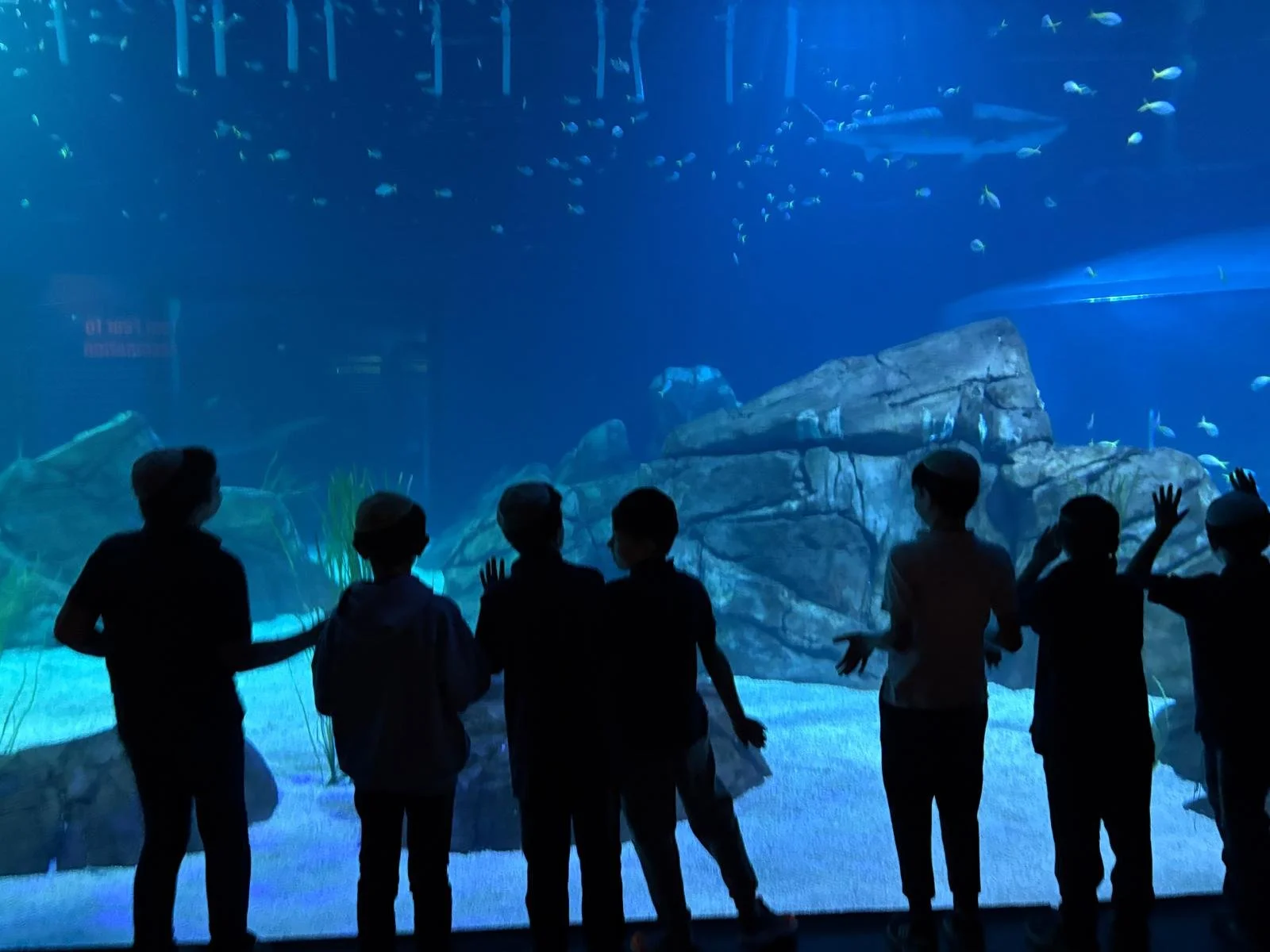
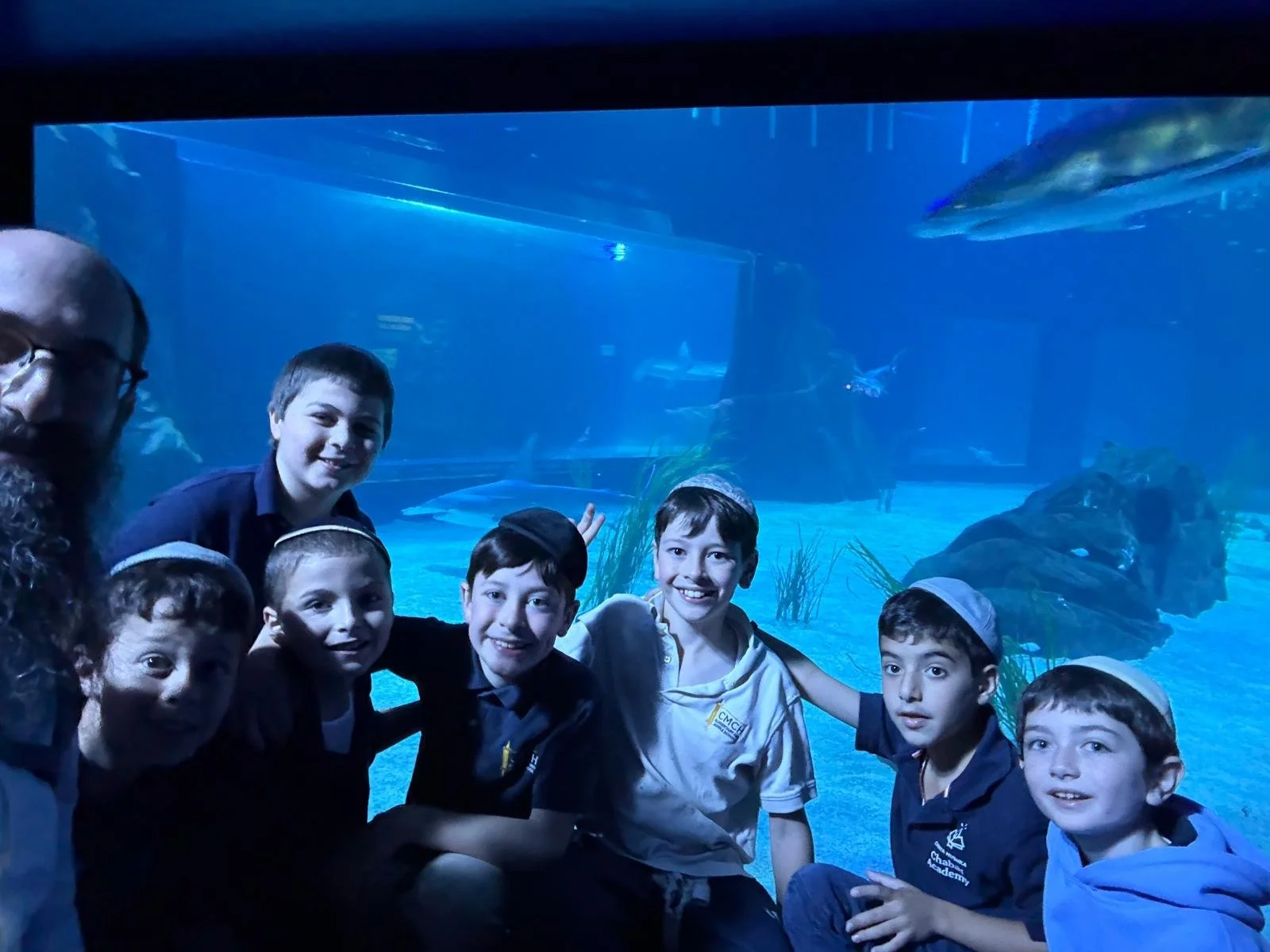
Behind the Scenes at the Georgia Aquarium
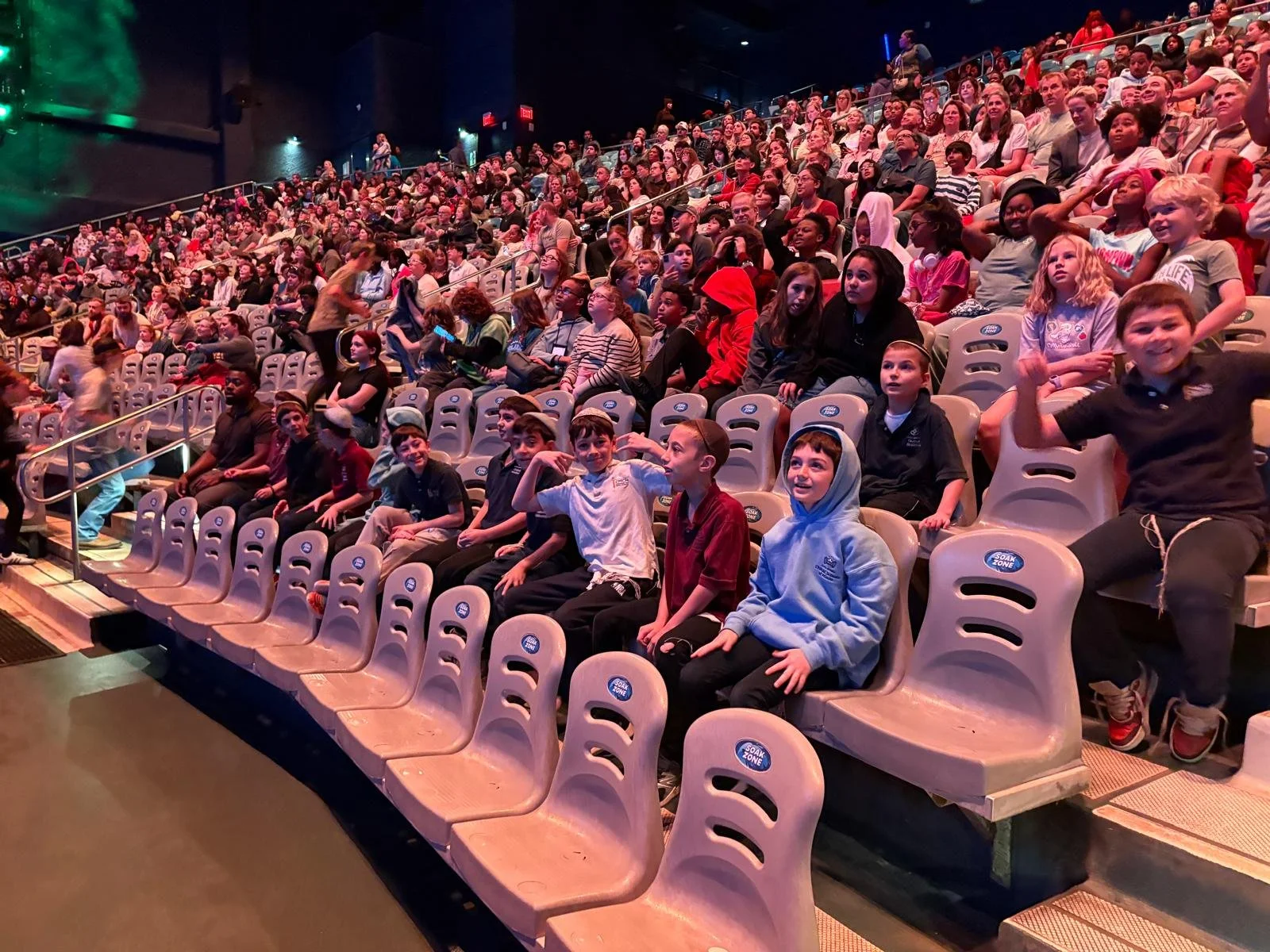
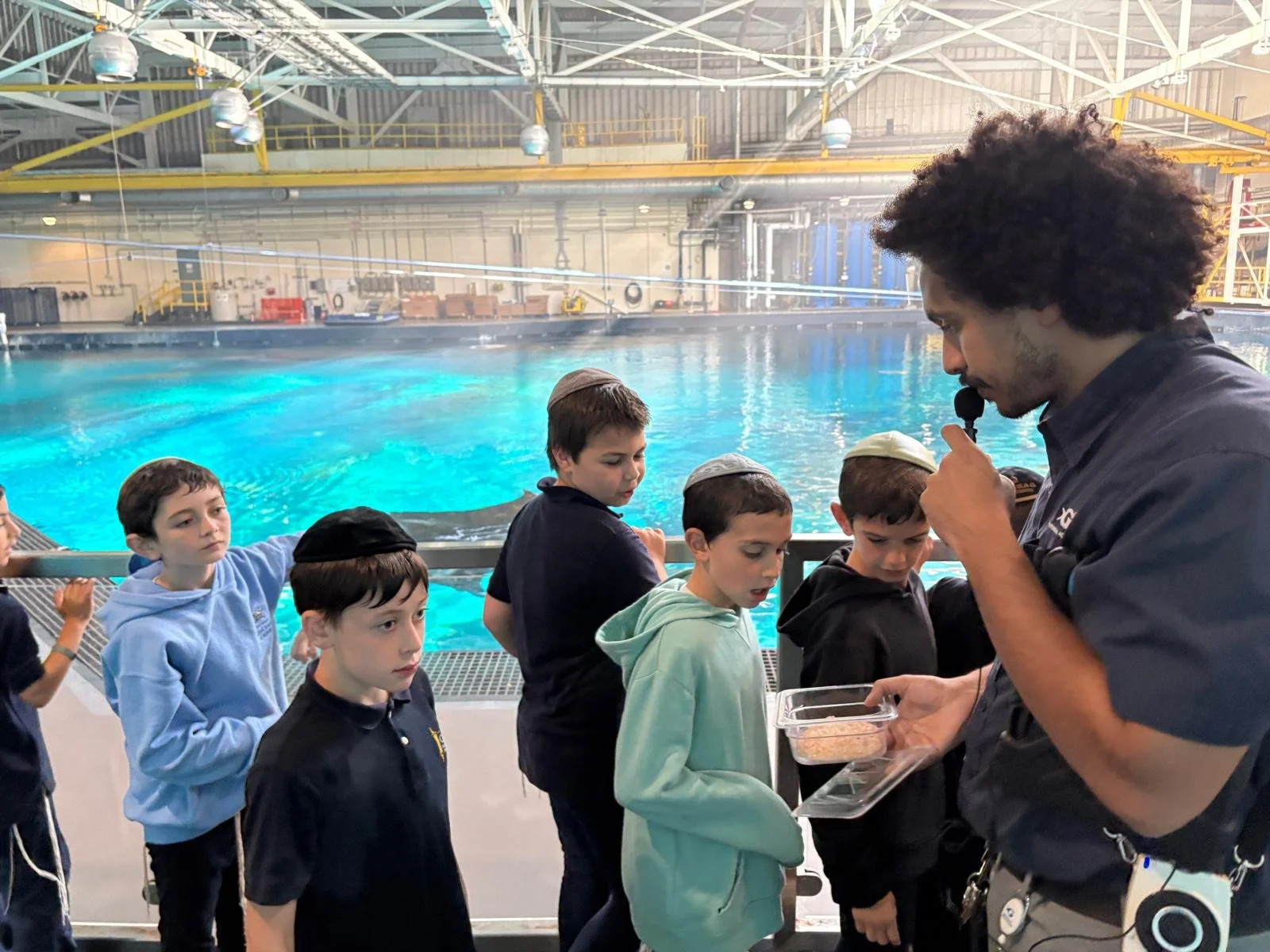
The fourth graders enjoyed an exciting trip to the Georgia Aquarium, where they got a behind-the-scenes tour of the whale shark and tropical reef aquariums! They explored marine food webs and learned about the harmful effects of plastic pollution on ocean habitats, bringing their science studies to life.
Thank you to our teachers, Mrs. Kraitzik, Mr. T, and Rabbi Meyers, and our parent chaperone Mrs. Frankforter , for making this trip possible and creating such a fantastic experience and lasting memories for our students!
Rock Detectives: Junior Geologists at Work
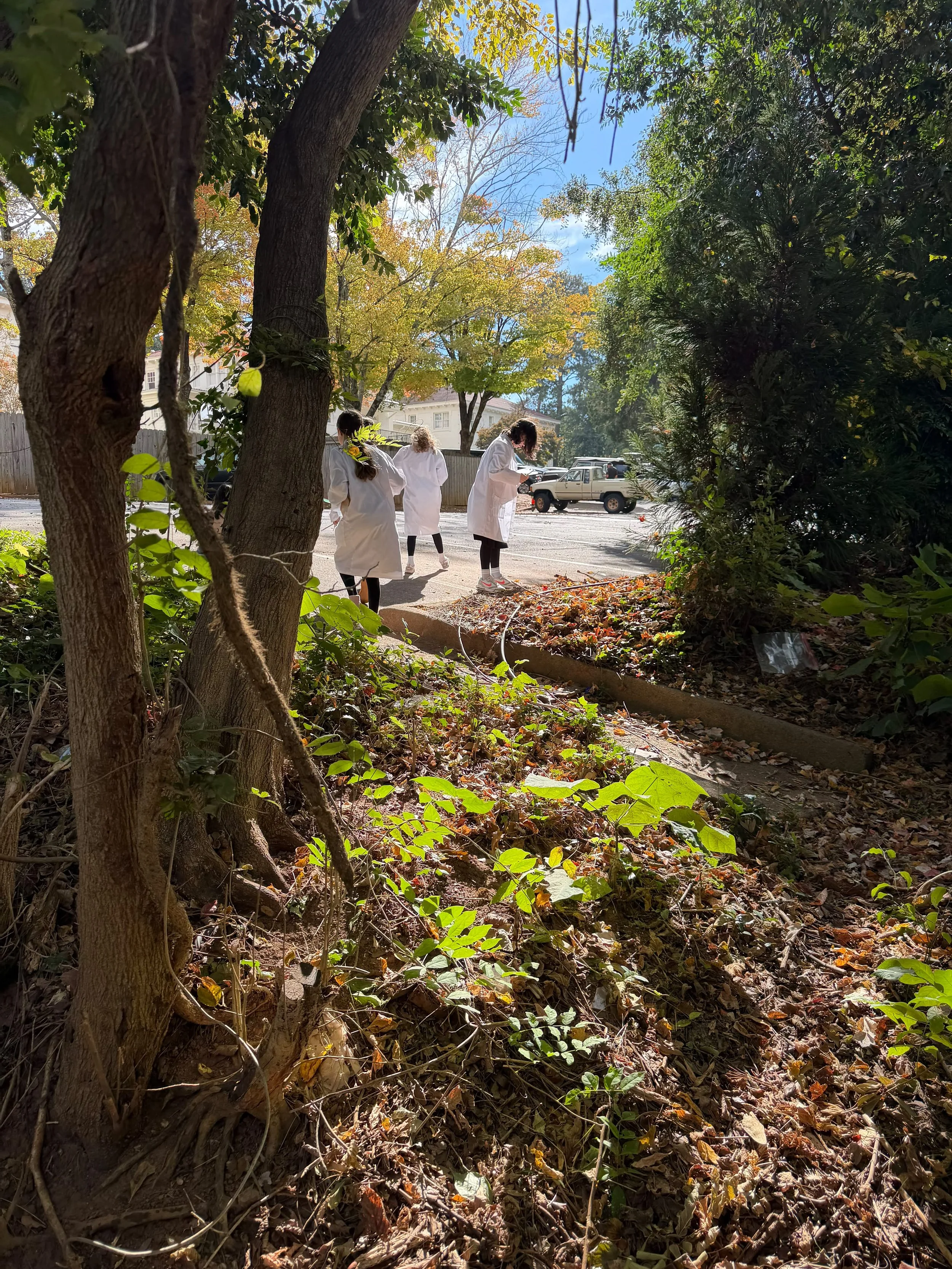
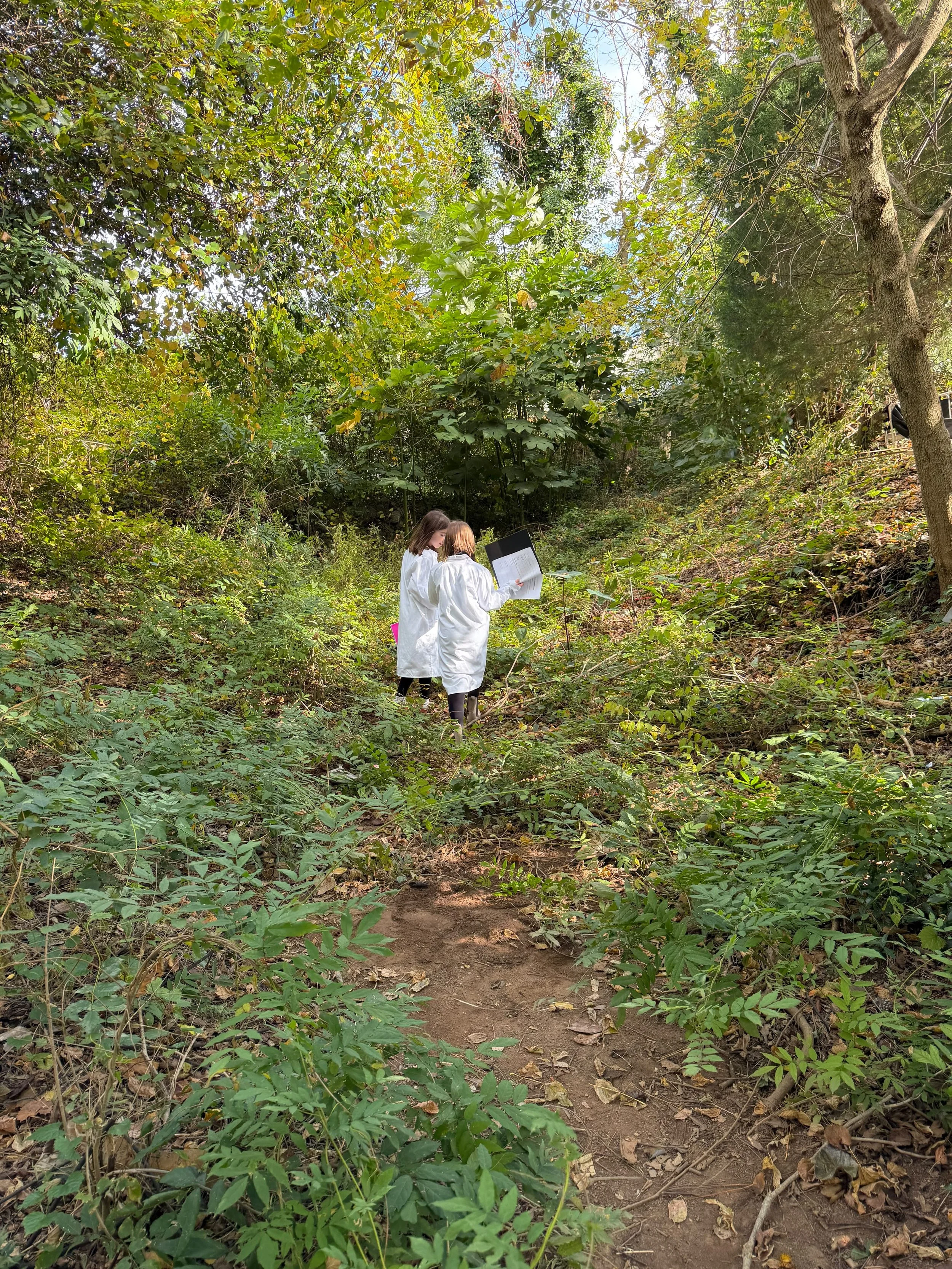
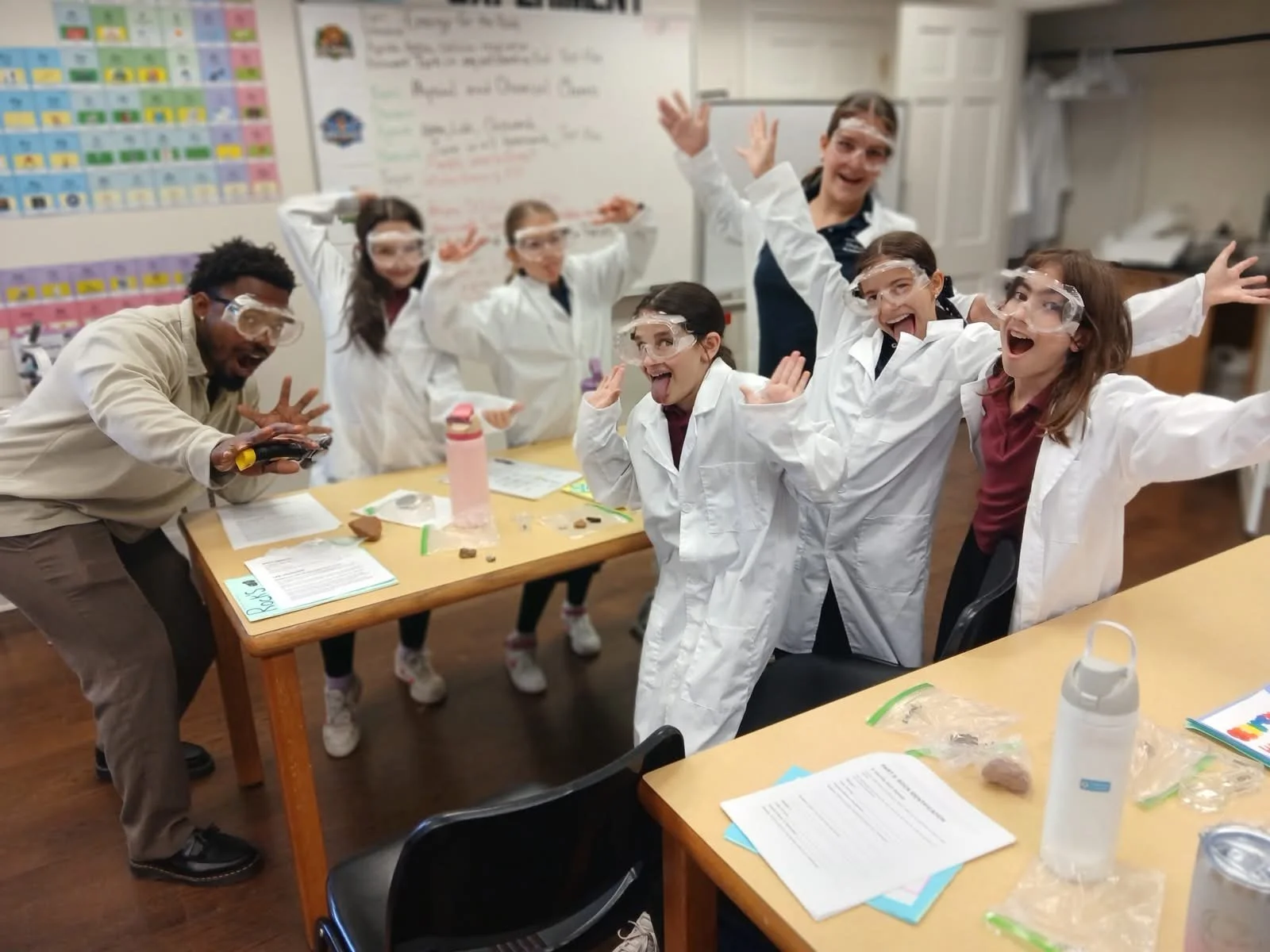
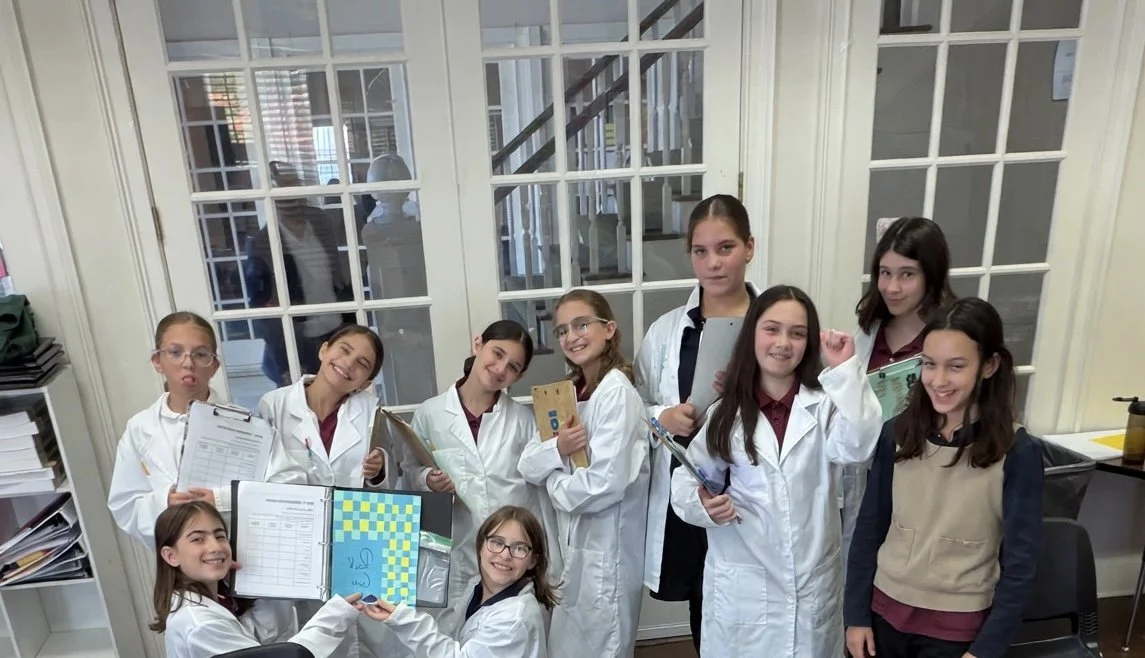
Our 6th-grade science students became junior geologists as they investigated rocks found around the school! In the first part of their rock lab, students conducted experiments to identify three unknown rocks. They then took their investigation a step further by examining the rocks’ composition and using their observations to uncover more clues about each specimen.
A shout-out to Mr. T and Mrs. Rowe for turning our school grounds into a hands-on geology lab!
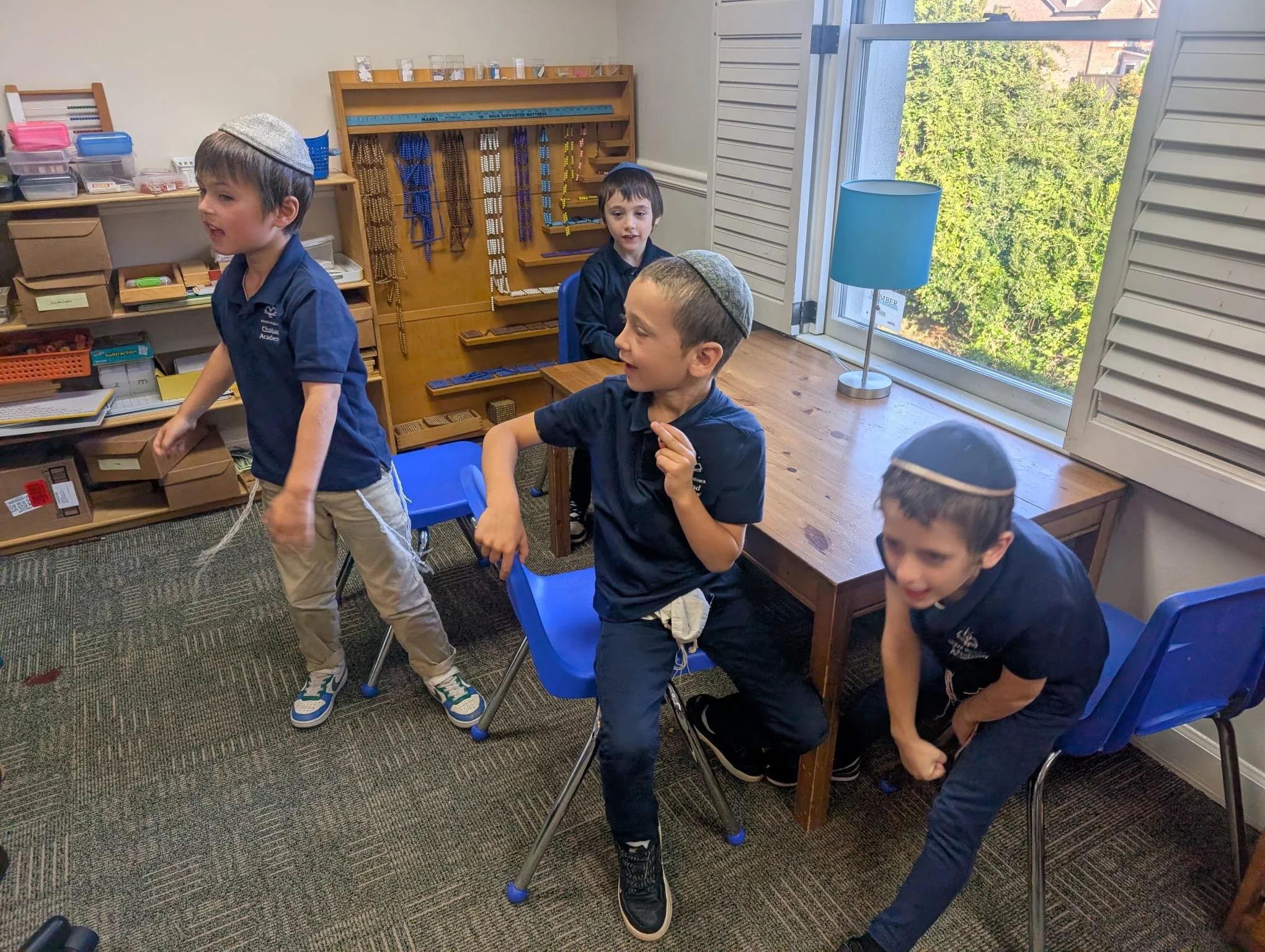
Shluchim Specials
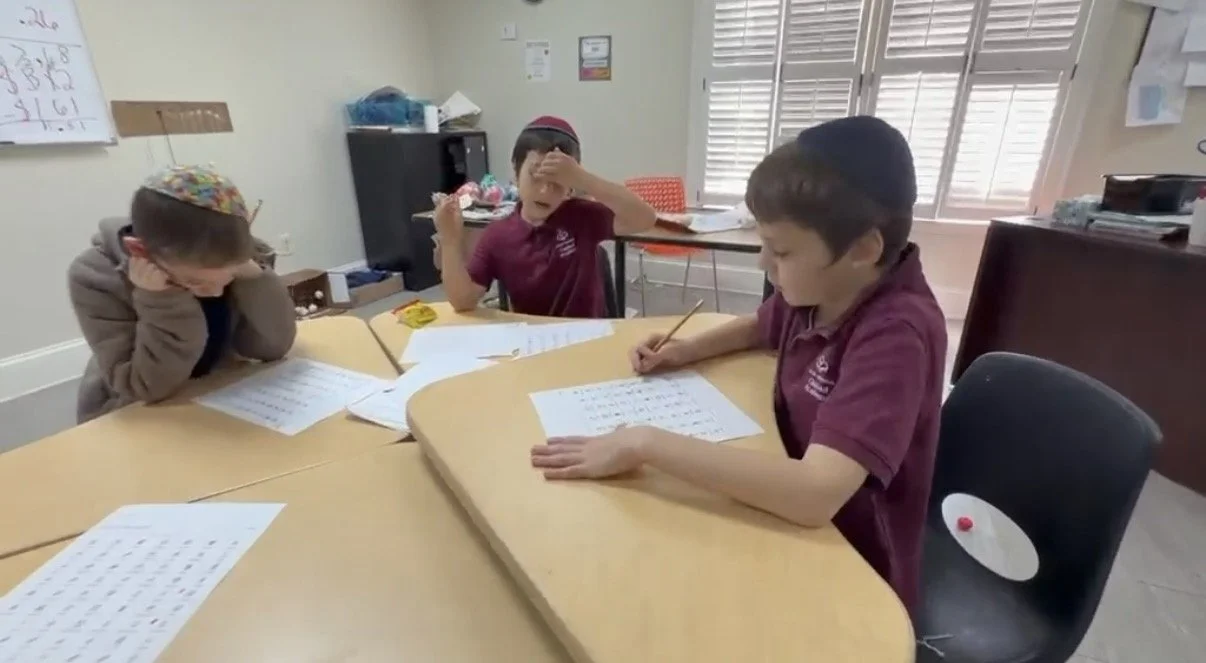
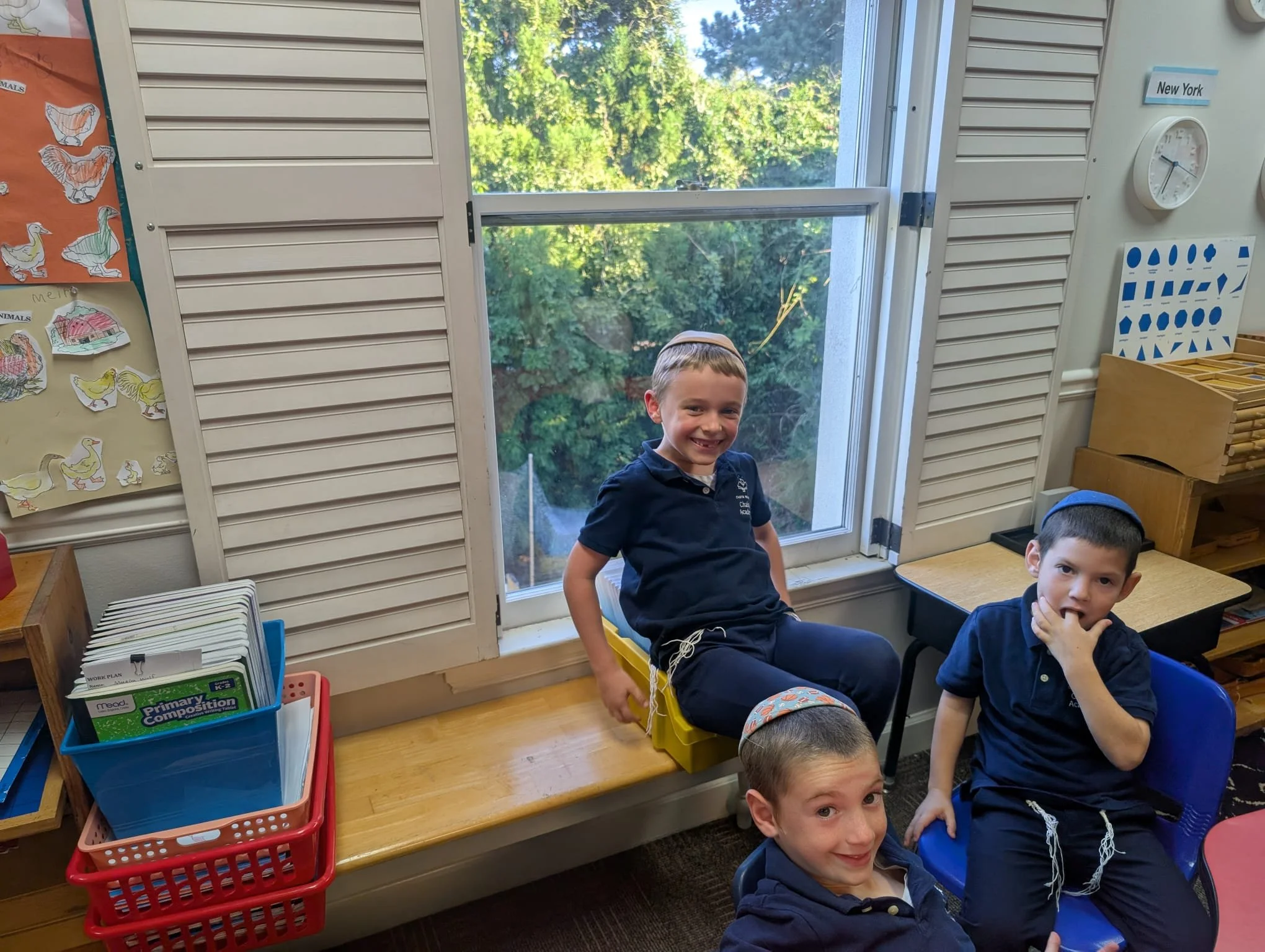
Shluchim Specials have been bringing excitement and friendly competition to classrooms across CMCA! The shluchim visit different grades throughout the week, leading interactive activities that make parsha learning especially fun. Fourth graders enjoyed a game of Hot Potato, answering parsha questions whenever the music stopped, while second and third graders tested their knowledge with Parsha Bingo. Another class took on a fast-paced buzzer challenge, racing to answer parsha questions. Each visit brings something new for the students to look forward to, making Shluchim Specials a weekly highlight!
Thank you to our awesome and dedicated Shluchim, Moshe Weiss, Moshe Teldon, Isaac Greenwald, and Yossi Dorn!
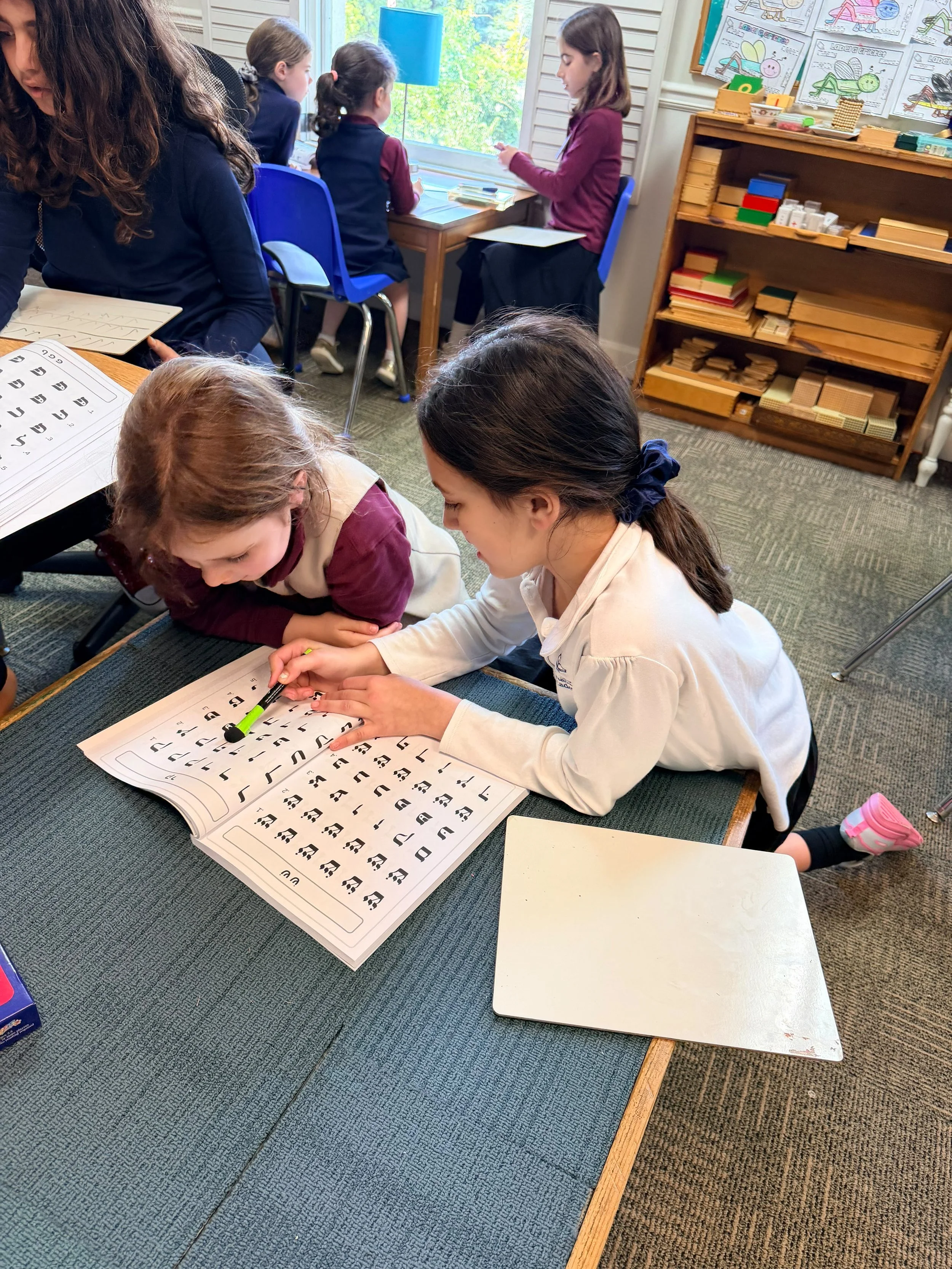
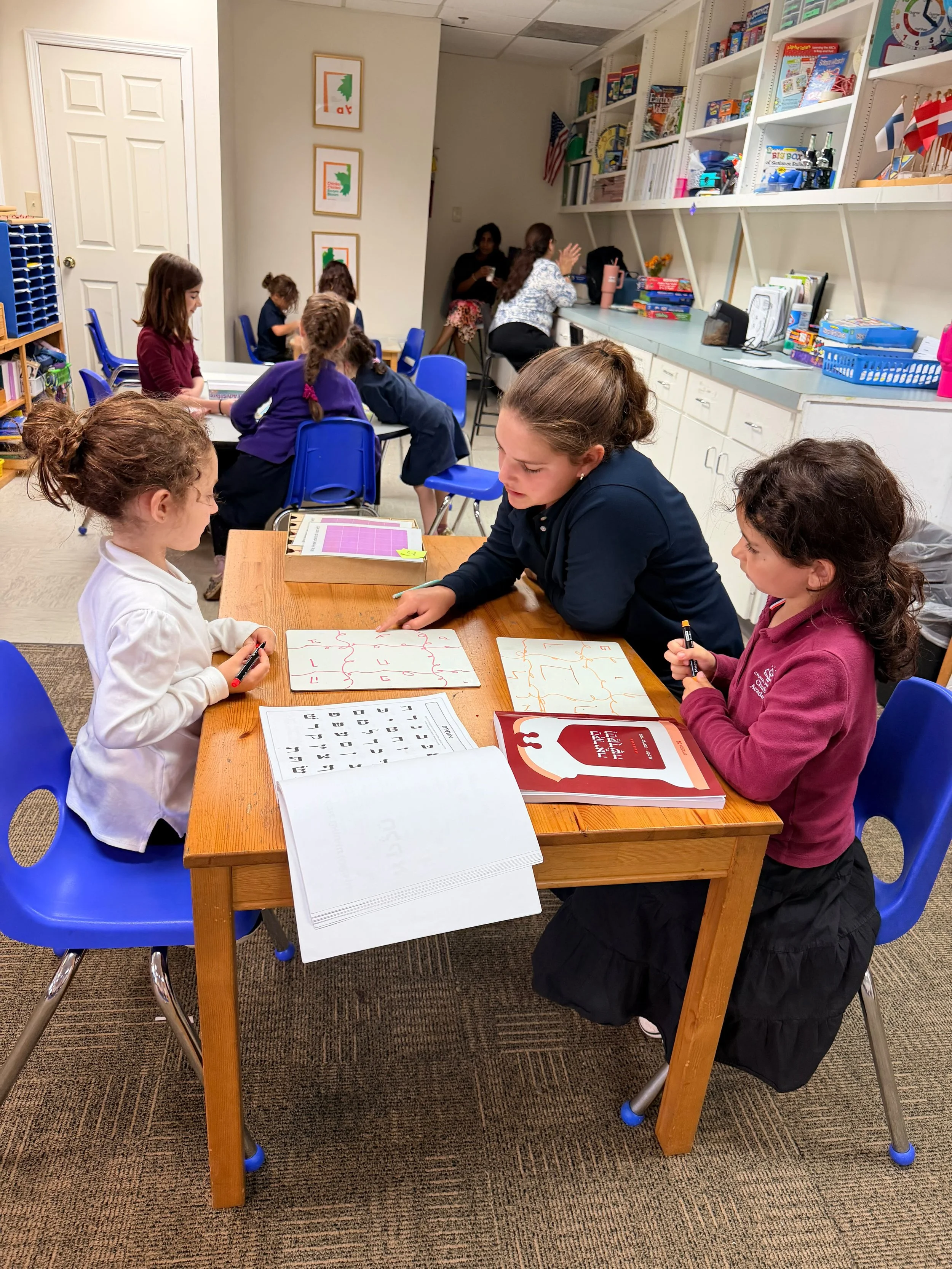
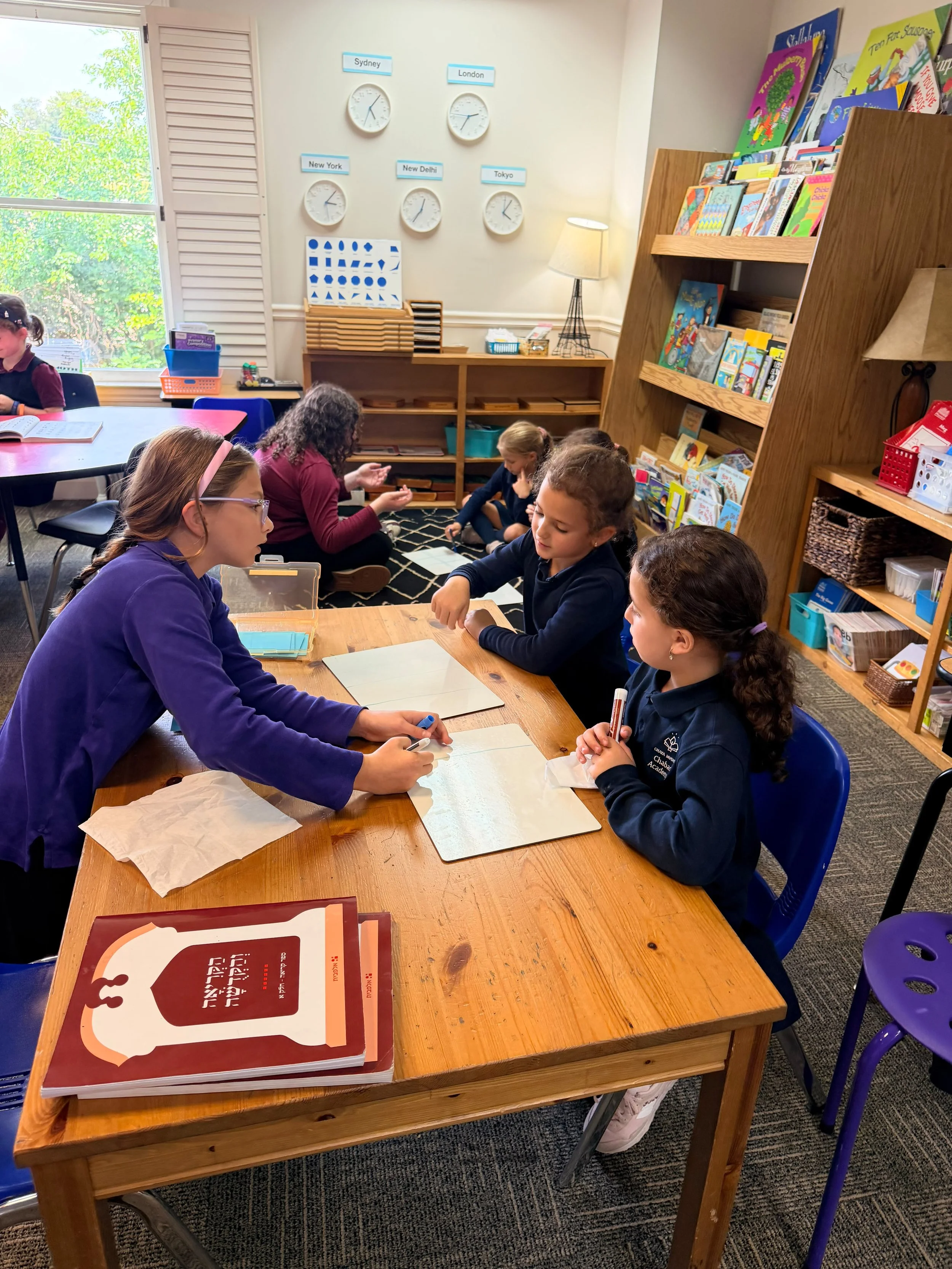
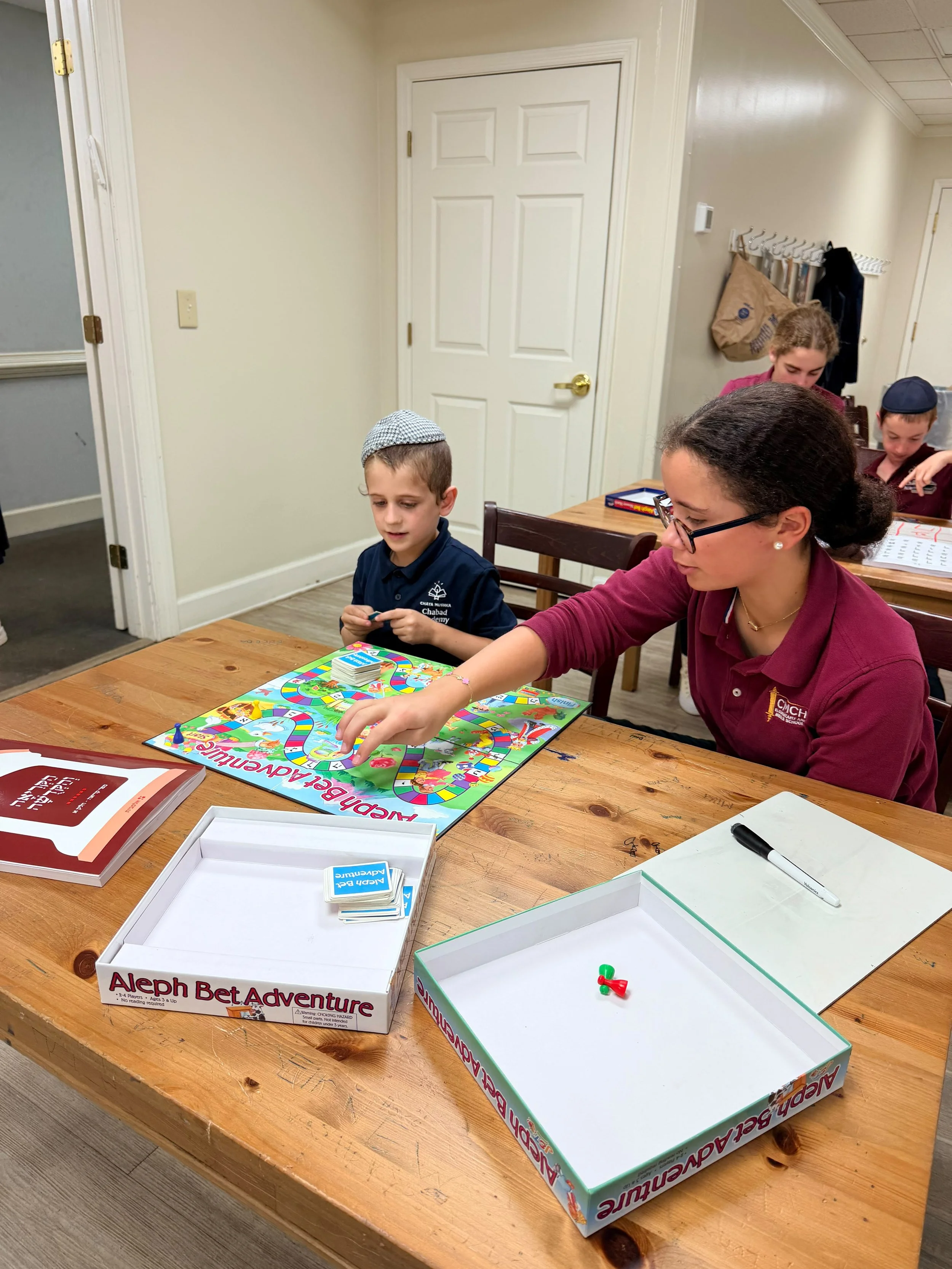
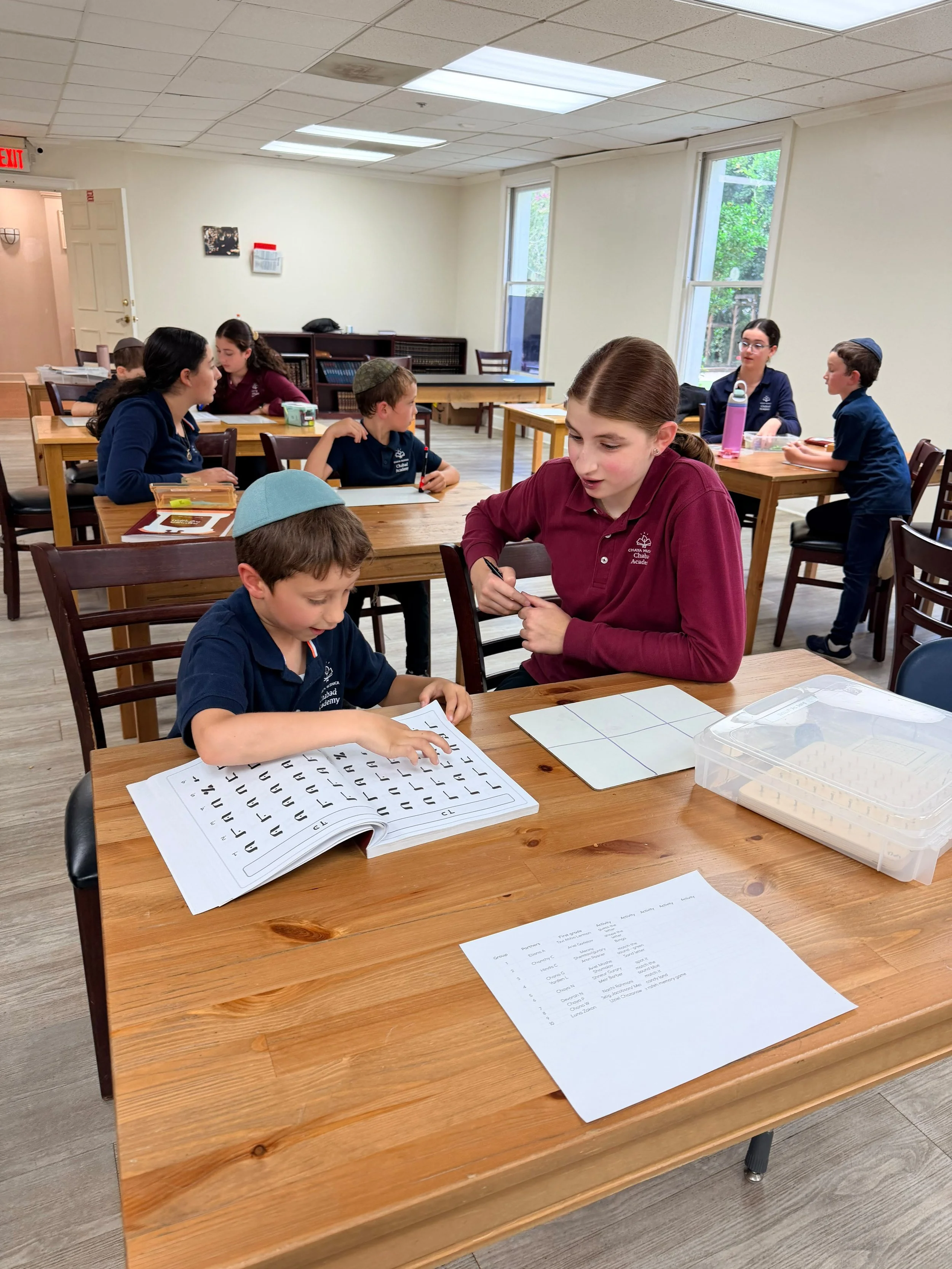
Kriah Clinic - Learning Through Teaching!
“You don’t truly understand something until you can teach it to someone else.” - A principle inspired by Richard Feynman’s teaching philosophy.
At Kriah Clinic, we bring this powerful idea to life!
Our middle school girls have the wonderful opportunity to become teachers and mentors to younger students, including first-grade boys and girls and second-grade girls.
During each 30-minute session, the girls work one-on-one with their younger students, practicing Hebrew reading and writing and enjoying a fun, interactive Kriah game.
Through this engaging experience, our younger students strengthen their Kriah skills, build confidence, and develop a love for learning, while our middle school girls reinforce their own knowledge, develop leadership skills, and discover the joy of teaching.
At Kriah Clinic, everyone learns, everyone grows, and everyone succeeds!
Thank you, Mrs. Lew, for all the thought, coordination, creativity, and inspiration you pour into making this program so meaningful and special! It has become a highlight of the week for both the older and younger students involved!

Mivtza Shakul Honor Roll
Kol Hakavod to the Middle School T’mimim who excelled in davening this week!
Yam Benaish
Meir Charytan
Simon Jacobson
Eli Lipskier
Ethan Matatov
Aharon Moshe Meyerowitz
Daniel Morris
Meir New
Zevi Rahmani
Mendel Wolf
Gabriel Khanukaev
Every Middle School boy is capable of making the Tefillah Honor Roll.
📌 Monthly Prize Reminder: Students who make the Tefillah Honor Roll [3] out of [4] weeks during the month will earn a prize.
Keep up the great effort!

Happy Birthday to our students with Cheshvan birthdays:
Yosef Abraham - 6 Cheshvan
Raya Robbins - 7 Cheshvan
Zevi Rahmani - 9 Cheshvan
Gabriel Khanukaev - 13 Cheshvan
Eliana Antopolsky - 15 Cheshvan
Meir Brafman - 16 Cheshvan
Zevi New - 16 Cheshvan
Rochel Loebenstein - 16 Cheshvan
Chaya Freedman - 17 Cheshvan
Chaim New - 18 Cheshvan
Raisel Chaya Guterman - 21
Cheshvan
Efraim Brafman - 21 Cheshvan
Koby Friedman - 26 Cheshvan
Shua Werbin - 26 Cheshvan
The Latest On Instagram!
FOLLOW ALONG @CMCHatlanta

